
Description
Application Scenario
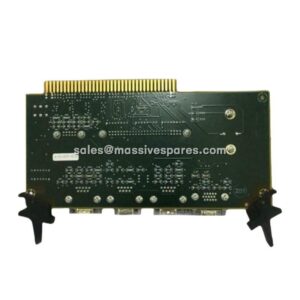
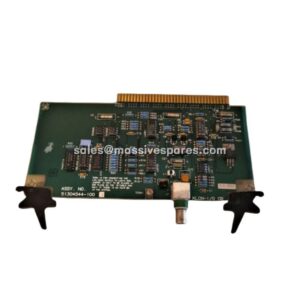
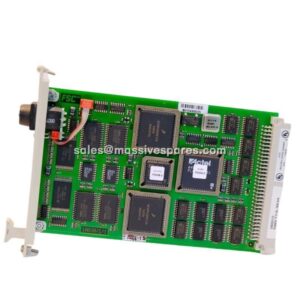
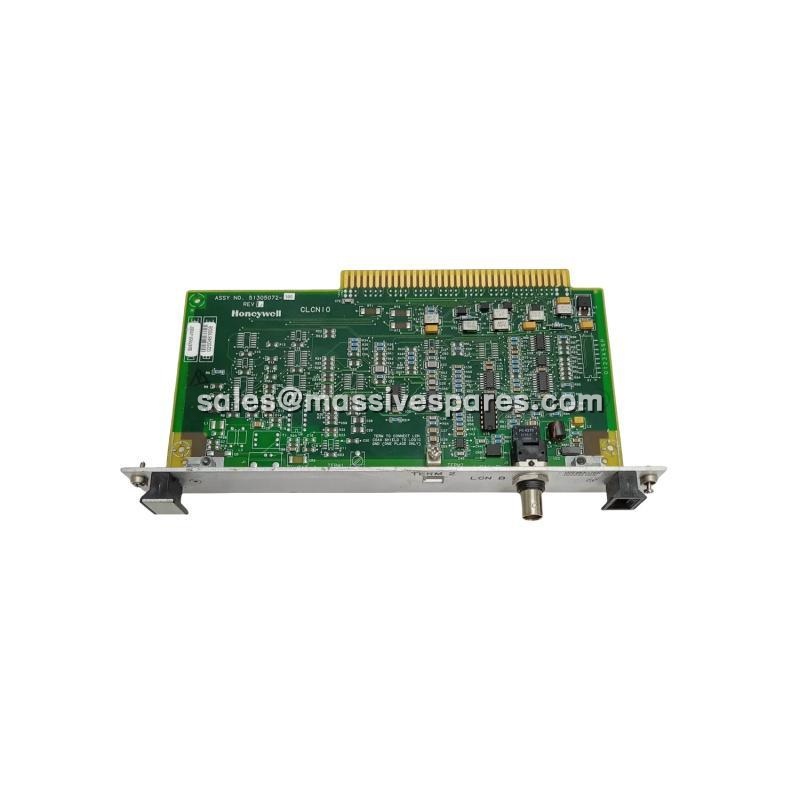
In a Middle East natural gas liquids (NGL) fractionation plant running a Honeywell TDC 3000 system, a control engineer noticed intermittent LCN node drops during compressor surge-recovery cycles. The root cause was traced to common-mode electrical noise coupling into the controller node through a degraded legacy communication board. Replacing the faulty unit with a genuine Honeywell 51305072-300 (CLCN-B) and pairing it with a CLCN-A board restored clean A/B redundant synchronization. The plant eliminated unplanned node communication loss, maintained deterministic I/O refresh for anti-surge control, and avoided a full DCS network upgrade.
This is the real-world value of the 51305072-300: in safety- and revenue-critical process plants, a single failed LCN interface can stall an entire control loop. Having a verified, CE-compliant CLCN-B card on the shelf turns a potential multi-hour outage into a brief, planned swap—protecting uptime, safety, and production KPIs.
Parameters
| Main Parameters | Value/Description |
|---|---|
| Product Model | 51305072-300 (CLCN-B CE) |
| Manufacturer | Honeywell Process Solutions (USA) |
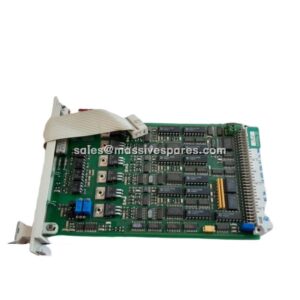
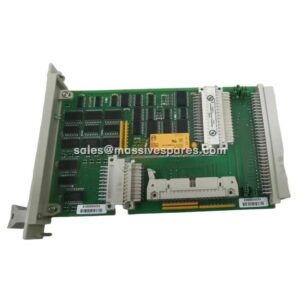
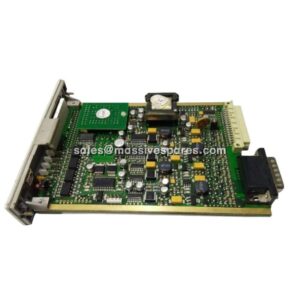
| Product Category | LCN Coaxial Cable “B” I/O Paddle Board / Interface Card |
| System Platform | TDC 3000 / TotalPlant Network (TPN) / Experion PKS |
| Network Medium | Coaxial LCN Cable B (green shrink-fit identification band) |
| Connector Type | BNC Tee Connectors (compatible P/N 51190728-105) |
| Redundancy | LCN Cable A / Cable B dual-path, 1:1 hot-standby capable |
| Backplane Power | 24 V DC nominal, system backplane supplied |
| Power Consumption | ≤ 10 W typical (logic + isolation) |
| Isolation / Protection | Channel-to-system isolation, overvoltage / overcurrent / reverse-polarity protection, RFI filtering |
| Chassis Compatibility | 5-slot & 10-slot dual-node LCN chassis backplanes |
| Operating Temperature | 0 °C to +60 °C (extended storage: -40 °C to +85 °C) |
| Compliance | CE (Low Voltage + EMC Directives), UL / RoHS per OEM build |
| Installation | Card-cage slot mounting; front BNC tee supports hot isolation |
Note: Certain values (power, isolation, compliance) are consolidated from Honeywell-compatible DCS documentation and OEM build records; confirm exact revision-specific ratings against your system’s hardware reference manual before commissioning.
Technical Principles and Innovative Values
- Innovation Point 1 — Deterministic LCN Bridging. The 51305072-300 implements Honeywell’s dedicated point-to-point LCN serial architecture rather than a shared contention bus. By giving each node a predictable communication path, it removes bandwidth arbitration and latency jitter—essential for fast closed-loop control such as compressor anti-surge and emergency shutdown logic.
- Innovation Point 2 — A/B Redundant Continuity. Operating as the “B” side of a paired A/B LCN, the CLCN-B maintains continuous synchronization with its CLCN-A partner. A single cable or node failure does not break network traffic, and BNC-tee topology lets one node be serviced while the rest of the segment keeps communicating.
- Innovation Point 3 — Galvanic Isolation & Noise Immunity. The paddle board enforces channel-to-system electrical isolation and integrates hardware filtering compliant with CE EMC requirements. This blocks high-frequency common-mode spikes and 50/60 Hz ground-loop currents originating in field instrumentation from reaching sensitive node processor cards.
- Innovation Point 4 — Non-Volatile Configuration Integrity. Communication parameters and board configuration reside in non-volatile memory, so the 51305072-300 restores its node identity and link state immediately after power restoration—no manual re-addressing required.
- Innovation Point 5 — Maintenance-by-Design. Front-panel BNC tees and clearly color-coded green (Cable B) / yellow (Cable A) shrink bands make identification and replacement nearly foolproof, reducing human error during high-pressure outage work.