
Description
Application Scenarios:
Take a high-integrity pressure protection system (HIPPS) on a gas export pipeline. A single FSC rack in a remote compressor station monitors inlet pressure transmitters and, on high-high pressure, closes the block valve before the downstream facility can be over-pressured. The rack draws its 24 Vdc from the station’s battery-backed DC system — the same system that runs the telemetry and the valve actuators. That shared supply is the hidden problem: motor starting transients, solenoid switching and ground faults on the 24 V bus all propagate straight into sensitive logic electronics if the supply domains are not separated.
10300/1/1 is the barrier that stops that happening. Its galvanic isolation between the 24 Vdc input and the 5 Vdc output means noise, transients and earth potential differences on the plant DC system never reach the safety logic supply, and the low-ripple (< 40 mV peak-to-peak at full load) regulated output keeps the digital and analog cards inside their specified limits. Because the safety function cannot be allowed to disappear, the rack carries two 10300/1/1 modules in an N+1 arrangement: when one converter is removed for replacement, the other carries the full rack load and the HIPPS stays armed.
The same architecture repeats across the FSC installed base — emergency shutdown racks in refineries where a power dip is indistinguishable from a trip, boiler and burner management systems in captive power plants, fire and gas systems offshore where the cabinet sits next to high-current switchgear, and turbine and compressor safeguarding panels in LNG trains. In every one of them the failure mode engineers actually fear is not dramatic: it is a 5 Vdc rail that droops a few hundred millivolts and quietly takes the whole safety system to its de-energized state.
Parameter:
| Parameter | Value / Description |
|---|---|
| Product Model | 10300/1/1 |
| Manufacturer | Honeywell |
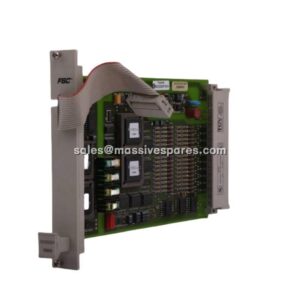
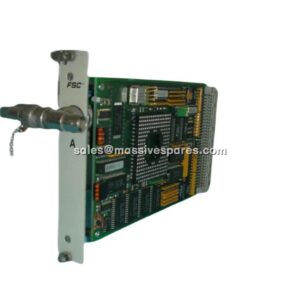
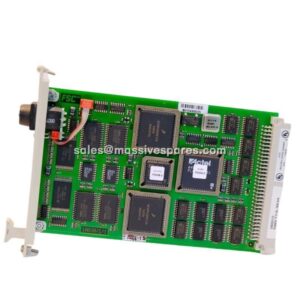
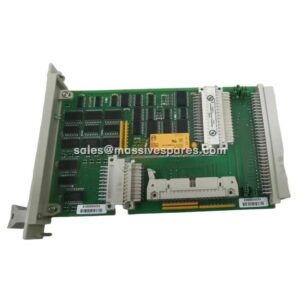
| Product Category | DC/DC converter module (isolated power supply card) for a safety control system |
| System Family | Honeywell Fail Safe Controller (FSC) — powers the 5 Vdc system bus of the central part and I/O racks |
| Input Voltage | 24 Vdc nominal, acceptable range –15% to +30% — matches a battery-backed plant DC system through charge and discharge swings |
| Input Current | < 3.9 A at 24 Vdc; inrush current limited to < 18 A by an on-board NTC thermistor |
| Output Voltage | 5 Vdc regulated, with overvoltage protection; set to 5.00 Vdc measured across the system bus connections |
| Output Current | 12 A from 0 to 45 °C, derated to 8 A from 0 to 60 °C — thermal derating is by design, not by failure |
| Output Ripple | < 40 mV peak-to-peak at full load — clean enough to keep FSC logic and analog cards inside their tight supply limits |
| Isolation & Protection | Galvanic isolation between 24 Vdc input and 5 Vdc output; overvoltage protection set at 5.75 Vdc; overcurrent and short-circuit protection with automatic or manual recovery |
| Efficiency | ≥ 70% — roughly 95 W drawn at full load, so cabinet thermal design must account for about 30 W of dissipation per module |
| Physical & Environmental | 8 TE × 3 HE Eurocard (8 HP, 3U); approx. 0.68 kg; IP20 for cabinet mounting; operating 0 to +60 °C with derating above 45 °C; CE, TÜV and UL approved (note: modules with suffix code 04602 or lower are not CE approved) |
| Installation Requirements | Must be mounted close to the system bus (e.g. 12-SBUS) because the 5 Vdc tolerance is only ±5%; remote sense wiring required (+sense on pin d6, –sense on pin d10); minimum conductor size 2.5 mm² (AWG 14) up to 8 A and 6 mm² (AWG 10) up to 12 A for the 5 Vdc supply and ground |
Technical Principles and Innovative Values:
- Innovation Point 1: Galvanic isolation as a safety function, not a convenience. 10300/1/1 separates the 24 Vdc plant domain from the 5 Vdc logic domain completely. Ground loops, common-mode noise and switching transients from solenoids, relays and actuators on the shared DC bus stay on the input side. For a SIL 3 system whose digital inputs are continuously tested for correct logic 0 and logic 1 reception, a clean reference is not optional — it is what makes those self-tests meaningful.
- Innovation Point 2: Remote sensing against a ±5% budget. The FSC 5 Vdc rail allows only ±5%, and at 12 A even a modest wiring resistance will eat that budget. 10300/1/1 therefore regulates against sense leads landed at the system bus (+sense on d6, –sense on d10) rather than at the converter terminals, compensating for voltage drop in the supply and ground conductors. Paired with the specified conductor cross-sections — 2.5 mm² up to 8 A, 6 mm² up to 12 A — this is what keeps the rail inside tolerance at the far end of a fully populated rack.
- Innovation Point 3: NTC inrush limiting with a designed-in discipline. On energization the module’s NTC thermistor holds the surge below 18 A so that a converter swap does not depress the station DC bus. The physics of an NTC is that it must cool to recover its resistance, which is why Honeywell specifies a 30-second off-line interval before re-energizing: re-inserting a warm 10300/1/1 defeats the limiter and can cause exactly the supply dip that trips the system you were trying to protect. That is a small piece of operating discipline with an outsized effect on availability.
- Innovation Point 4: Honest thermal derating instead of silent stress. 10300/1/1 is rated 12 A to 45 °C and 8 A to 60 °C, with a published derating curve rather than a single optimistic number. Practically, that means a fully loaded rack in a hot cabinet should be planned at 8 A per module and given ventilation — guidance that prevents the slow, thermally driven failures that are hardest to diagnose in a safety system.
- Innovation Point 5: N+1 redundancy without a transfer switch. Two 10300/1/1 modules can share the load, so a converter can be withdrawn and replaced while the safety system stays live. It is worth knowing the diagnostic nuance: on modules without a suffix code, the output LED can stay lit even when that unit is switched off, because it is being back-fed from the redundant partner — so LED status alone should not be read as proof that a given unit is delivering current.
Application Cases and Industry Value:
Case 1 — Refinery ESD rack, converter replacement without a shutdown. An FSC emergency shutdown rack at a European refinery was drawing close to the single-converter limit after years of I/O additions, and the maintenance team had flagged that a 10300/1/1 failure would de-energize the whole rack and trip the unit. The fix was to add a second 10300/1/1 in the power slot, wired into the same 5 Vdc system bus with correctly sized conductors and landed sense leads. With two units sharing the load, the rack gained the ability to lose one converter and stay armed; the subsequent removal of the older unit for bench testing was carried out under load with no effect on the ESD function. The measurable outcomes: the planned unit outage previously required for power-card work was eliminated, and the 5 Vdc rail — previously drifting toward the lower tolerance limit on the fully populated rack — settled back to the 5.00 Vdc setpoint once the sense wiring and conductor sizing were corrected.
Case 2 — Offshore fire and gas system, isolation as the cure for nuisance faults. On a North Sea platform, an FSC fire and gas rack shared its 24 Vdc source with solenoid valve drives and motor starters. Operators were seeing intermittent diagnostic faults on digital input cards and occasional unexplained watchdog events, all traceable to electrical noise and voltage dips on the shared DC bus rather than to any genuine field condition. Replacing the degraded converter with a healthy 10300/1/1 — and verifying that its galvanic isolation, sense wiring and OVP setting at 5.75 Vdc were intact — removed the coupling path between the noisy plant 24 V domain and the 5 Vdc logic supply. Nuisance diagnostics dropped away and, more importantly, the fire and gas system’s availability during a real demand was no longer in question. In both cases the value delivered is the same: 10300/1/1 protects the availability of the safety system itself, which is the one asset a plant cannot afford to lose even briefly.