
Description
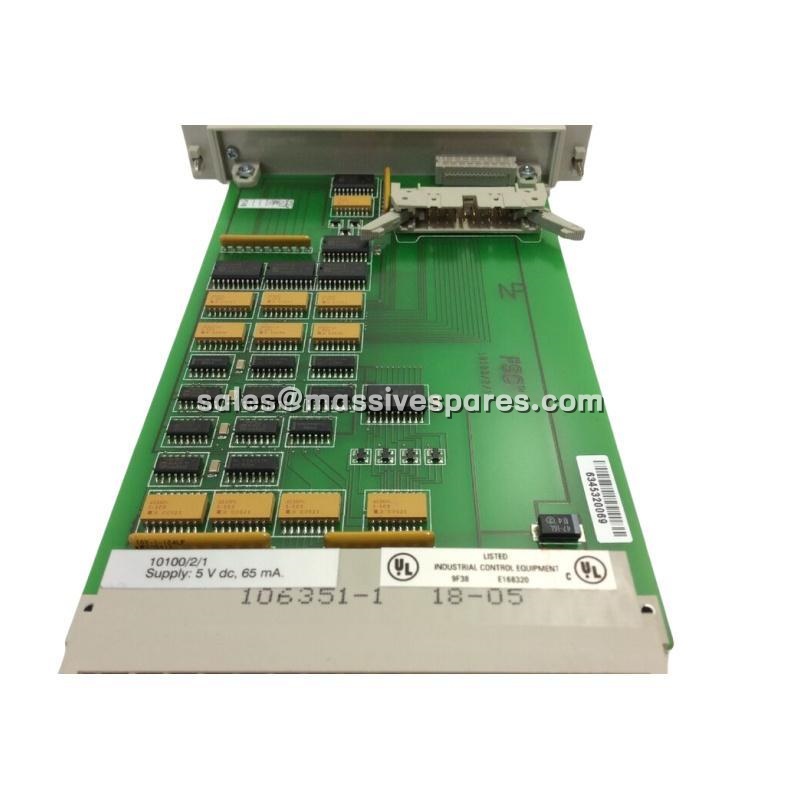
Technical Specifications
| Parameter Name | Parameter Value |
|---|---|
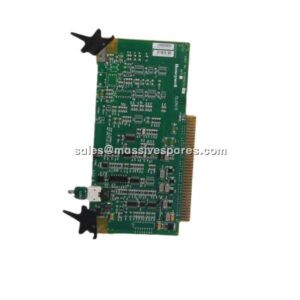
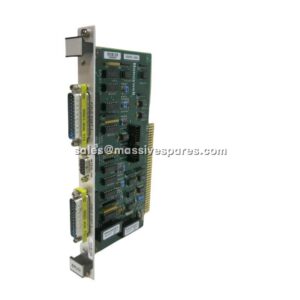
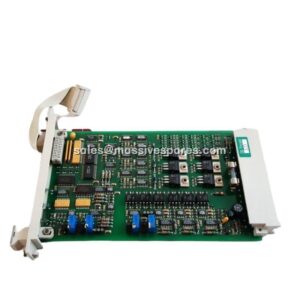
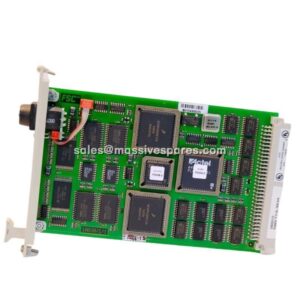
| Product Model | Honeywell 10100/2/1 (Horizontal Bus Driver, HBD; type number 10100/2/1 10900) |
| Manufacturer | Honeywell Process Solutions |
| Product Type | Horizontal Bus Driver Module / FSC Rack Communication Module |
| System Platform | Honeywell Fail Safe Controller (FSC), SIL 3 per IEC 61508 |
| Function | Terminates vertical bus, drives horizontal bus, manages I/O address-selection lines |
| Power Requirement | 5 Vdc from rack backplane |
| Current Consumption | 35 mA with A1 or A21 flat cable; 65 mA with A22 flat cable |
| Ripple Content | Less than 50 mV peak-to-peak |
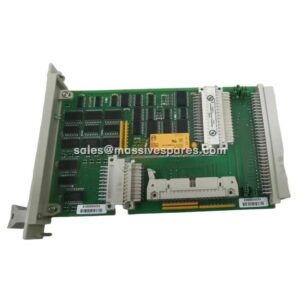
| Bus Interfaces | CN1 rear connector for vertical bus flat cable; CN3 connector for horizontal bus flat cable |
| Flat Cable Compatibility | A1 (non-redundant I/O), A21 (redundant I/O, one rack per HBD), A22 (redundant I/O, two racks per HBD) |
| Redundancy Support | Non-redundant, single-rack redundant and dual-rack redundant configurations |
| Key Coding | Module code holes A5, A7; rack code large pins A5, A7 |
| Space Requirements | 4 TE width × 3 HE height (4 HP, 3U Eurocard format) |
| Dimensions | Approximately 20 × 128 × 160 mm (0.8 × 5.0 × 6.3 in) |
| Weight | Approximately 0.11 kg (0.24 lb) |
| Operating Temperature | 0°C to +60°C (+32°F to +140°F) |
| Storage Temperature | -40°C to +85°C (-40°F to +185°F) |
| Relative Humidity | 5% to 95% non-condensing |
| Serviceability | Replaceable under power in standard systems; replacement in safety-related systems shuts down the Central Part |
| Minimum Software Version | FSC system software 3.00 or later |
| Approvals | CE, TÜV, UL |
Main Features and Advantages
Deterministic bus regeneration across the whole rack: The Honeywell 10100/2/1 is not a passive connector. It actively buffers and re-drives the horizontal bus so that digital communication pulses stay within their required voltage thresholds from the first I/O position to the last. This is the practical reason the module exists: a degraded bus edge produces exactly the kind of intermittent, hard-to-reproduce fault that a safety system cannot tolerate, and the driver removes that failure mode from the design.
Flexible architectures with three cable options: Because the Honeywell 10100/2/1 works with the A1, A21 and A22 flat cables, one part number covers non-redundant I/O, redundant I/O at one rack per driver, and redundant I/O spanning two racks per driver. Plants standardizing spares therefore only need to stock the module and the correct cable set, rather than several different board variants, and expansions from simplex to redundant I/O do not require a different driver family.
Keyed mechanical design that prevents mis-installation: Safety hardware must be impossible to install incorrectly, and the Honeywell 10100/2/1 achieves this with simple, robust mechanics: holes A5 and A7 in the module body must align with the large coding pins A5 and A7 in the rack. A module cannot be forced into a slot that is not intended for it, which eliminates a whole class of commissioning errors and post-maintenance faults in brownfield cabinets where several FSC board types look similar on the shelf.
Low-power, low-noise operation with service-friendly mechanics: Drawing only 35 mA or 65 mA at 5 Vdc, the module adds negligible thermal load to a densely packed safety cabinet, and its sub-50 mV ripple requirement is met by the standard FSC supply design rather than by any special provisioning. The Honeywell 10100/2/1 can be replaced with the rack energized in standard configurations, so maintenance teams can restore a bus segment without a full safety system outage, and the compact 4 TE × 3 HE footprint leaves room for additional I/O in the same rack.