Product Overview
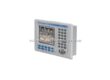
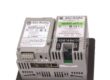
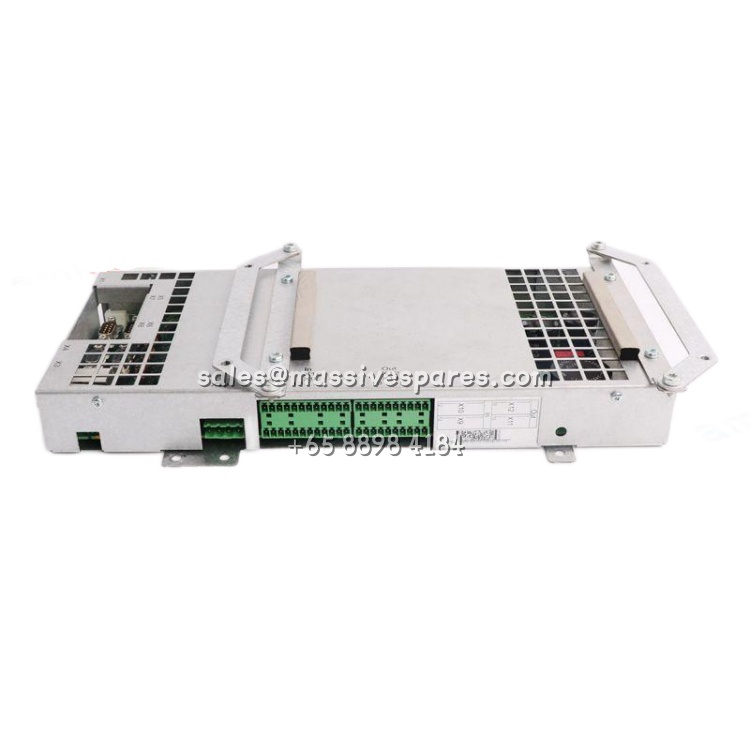
The 2012AZ10101B is an analog input module from the ABB Taylor 2012-series I/O family, the card-level interface that connects a field of two-wire 4–20 mA transmitters to a Taylor MODCELL, MOD 30, or MOD 300 distributed control system. Its job is deliberately narrow and deliberately critical: take the current loop from a pressure, differential-pressure, flow, level, temperature, or analytical transmitter, condition it against the module’s internal 250 Ω sense element, convert it through a 12-bit analog-to-digital path, and place a stable, scaled process value on the Taylor I/O backplane where the node processor and the control loops already expect to find it. There is no configuration wizard, no Ethernet port, and no menu — the 2012AZ10101B is a fixed-function, backplane-powered I/O cartridge, and that is exactly why plants running thirty-year-old Taylor systems still hunt for it by the part number.
The module belongs to the Taylor architecture that ABB carried forward after the Taylor Instruments acquisition, and it is mechanically and electrically keyed to the dedicated MODCELL/MOD 300 I/O rack rather than to any generic DIN-rail I/O form factor. Eight input channels share a common field-return arrangement and are galvanically separated from the backplane logic by an optical-isolation barrier, which is what lets the 2012AZ10101B sit in a refinery, boiler, or motor-control environment without turning every ground-loop transient into a drifting PV. The card reports its own health to the processor through the rack’s status channel, and the open-loop detection built into the input conditioning means a broken transmitter lead or a dead-loop supply shows up as a diagnostic rather than as a quietly plausible mid-scale reading.
What the 2012AZ10101B represents in 2026 is not a design win but a continuity asset. A MOD 300 system controlling a boiler, a fractionation column, or a water-treatment train was validated as a complete loop — field wiring, termination panel, I/O card, controller database, alarm setpoints, and cause-and-effect narrative. Replacing one analog input with a modern universal I/O drop means touching every layer of that validation. Dropping a tested 2012AZ10101B into the same keyed slot leaves the wiring, the database, and the loop identity intact, and the transmitter population comes back online inside the rack’s next scan cycle. For a maintenance organization whose charter is “keep the validated system running, not re-certify it,” that is the only procurement path that makes financial sense.
The B suffix on the 2012AZ10101B is a hardware-option and date-code revision, not a higher performance class. Taylor/ABB used these trailing letters for component-substitution and ECO changes across the 2012 series, and the safe replacement rule is simple: match the full 2012AZ10101B string first, and only then consider a same-family variant. A card that looks electrically identical but carries a different suffix can still fault on backplane keying or on the node processor’s ID check, and on a legacy DCS there is no helpful error message — just a rack that will not go online.
Technical Specifications
| Parameter | Value |
|---|---|
| Product Model | 2012AZ10101B |
| Manufacturer | ABB (Taylor Instruments heritage, ABB Process Automation) |
| Product Family | Taylor 2012-series I/O, MODCELL / MOD 30 / MOD 300 DCS |
| Product Type | Analog Input Module (AI), plug-in rack-mounted card |
| Input Channels | 8 channels, current-loop type, common field-return grouping |
| Input Signal | 4–20 mA DC, two-wire loop-powered transmitter |
| Optional Ranges | 0–20 mA / 1–5 V DC on some hardware revisions (verify by ECO label) |
| Input Impedance | ≤ 250 Ω typical (internal precision shunt) |
| A/D Resolution | 12-bit + sign, successive-approximation conversion |
| Accuracy | ±0.1% of span typical @ 25 °C; ±0.15% typical across range |
| Conversion / Scan | ≈ 30–40 ms per module sweep; rack-synchronous with node-processor scan |
| Open-Wire Detection | Yes — loss-of-loop reported below ≈ 3.6 mA |
| Isolation | Optical/galvanic, 500 V AC RMS field-group to backplane/logic |
| Diagnostics | Module Active and Fault indication; loop-status visible at engineering station |
| Interface to Controller | Dedicated Taylor 2012 I/O expansion/backplane bus |
| Compatible Processors | Taylor 2012 node-processor class and MOD 300/MODCELL I/O racks (match exact rack P/N) |
| Power Source | Drawn from DCS rack backplane; +5 V DC ≈ 350 mA typical, internal regulation |
| Module Configuration | Hardware/group configured; scaling and alarm limits set in DCS database |
| Indicators | Module Active (green), Fault (red/amber); per-channel display is rack-dependent |
| Operating Temperature | 0 to +60 °C (32 to 140 °F), control-room/cabinet environment |
| Storage Temperature | −20 to +70 °C typical |
| Humidity | 5% to 95% RH, non-condensing |
| Mounting | Keyed slot in dedicated Taylor MODCELL / MOD 300 I/O chassis |
| Termination | Via rack termination panel / field-wiring connector (card does not carry screw terminals) |
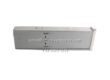
| Physical Form | Single-slot PCB card with edge connector and front-panel extractor |
| Compliance | Legacy UL/CSA/CE per original Taylor release; confirm label marking |
| Lifecycle Status | Obsolete — available as refurbished, tested surplus only |