Technical Specifications
| Parameter Name | Parameter Value |
|---|---|
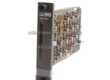
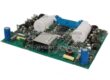
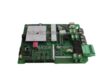
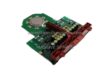
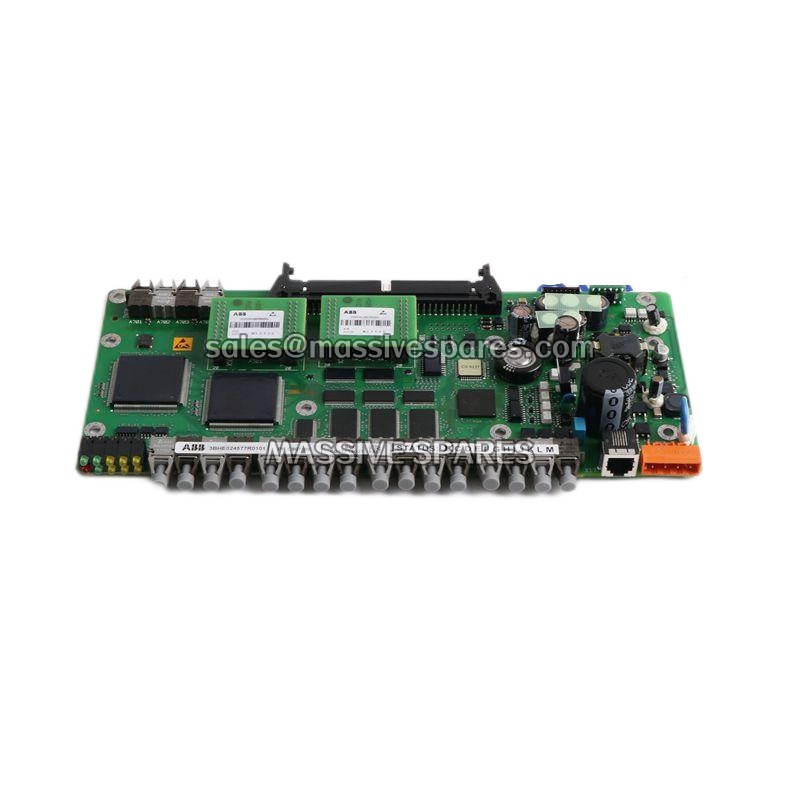
| Product Model | 3BHB006338R0001 |
| Functional Designation | UNS0881a-P, V1 |
| Manufacturer | ABB (Power Generation & Water) |
| Product Type | GDI PCB Completed (Gate Drive Interface Printed Circuit Board) |
| Compatible Systems | ABB UNITROL 5000 / UNITROL 6000 static excitation (incl. X-Power) |
| Control-Side Supply | +24 V DC (±10–15%), from excitation cubicle backplane |
| Power-Side Supply | ±15 V DC, generated on-board via isolated DC-DC |
| Drive Channels | 6 independent outputs, mapped to 6-pulse fully controlled rectifier bridge |
| Drive Capability | >2 A typical per channel (pulse current) |
| Input Signal | Fiber-optic or low-voltage logic PWM trigger pulses from COB/CIO/UCO |
| Isolation | Opto-coupler + pulse transformer; control-to-power ≥2.5 kV AC / 1 min |
| Pulse Frequency | Up to 20 kHz (IGBT versions rated to 50 kHz) |
| Feedback Inputs | 6 channels: overcurrent, overvoltage, over-temperature, short-circuit |
| Status Outputs | 2 channels: driver-healthy / fault alarm (relay or transistor) |
| Communication Interfaces | Procontrol P / UNITROL proprietary backplane bus; 2 fiber-optic ports; RS485 / Modbus RTU |
| Protection Functions | Overcurrent shutdown, undervoltage lockout (UVLO), over-temperature derating, dead-time control, fault latching |
| Diagnostics | Power-on self-test, periodic self-test, channel status LEDs, fault logging |
| Response Time | Fault detection ≤500 ns; drive shutdown ≤1 µs |
| Mounting | Excitation cubicle dedicated backplane slot, DIN rail + panel retaining screw |
| Protection Rating | IP20 (cabinet installation only) |
| Operating Temperature | 0 °C to +60 °C (cabinet interior) |
| Storage Temperature | −40 °C to +85 °C |
| Relative Humidity | 5% to 95% RH, non-condensing |
| PCB Coating | Industrial conformal coating (moisture and corrosion protection) |
| Physical Dimensions (L × W × H) | 270 × 100.2 × 100.2 mm |
| Net Weight | Approx. 0.24 kg |
| Certifications | CE, UL; compliant with IEC 61010, IEC 61000-4 EMC, IEC 61508 (selected batches) |
| Lifecycle Status | Original production discontinued; supplied as new-surplus / refurbished stock |
Main Features and Advantages
Precision gate drive for six-pulse bridges
The defining capability of the ABB 3BHB006338R0001 is its six independent, isolated gate drive channels. Each channel receives a phase-displaced PWM trigger command from the COB and converts it into a high-current gate pulse with the voltage, current, and timing demanded by ABB’s standard thyristors and IGBT modules. With a pulse delay below 1 µs and phase accuracy in the tens of nanoseconds, the board preserves the phase integrity of the controller’s firing-angle calculation all the way to the semiconductor—directly determining how cleanly and efficiently the rectifier bridge delivers excitation current to the generator rotor.
Galvanic isolation between control and power domains
The ABB 3BHB006338R0001 uses opto-couplers together with pulse isolation transformers to provide galvanic separation of at least 2.5 kV AC (1 minute) between the control side and the power side, with additional inter-channel isolation. This barrier prevents ground-loop currents and high-energy transients on the bridge side from propagating back into the controller and backplane. In the electrically hostile environment of a power cubicle, this isolation is the primary reason the control electronics survive a semiconductor fault event.
Integrated fault detection and fast shutdown
Each channel independently monitors overcurrent, overvoltage, gate open-circuit, short-circuit, and over-temperature conditions. When an anomaly is detected, the ABB 3BHB006338R0001 reacts in nanoseconds: fault detection within 500 ns and drive shutdown within 1 µs. The fault is latched, logged with type and timestamp, and reported back to the controller through the backplane bus—allowing the excitation system to execute loss-of-field, overcurrent, or cubicle-protection logic without delay. A single channel failure does not disable the remaining outputs, preserving partial operation where the application permits it.