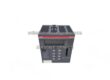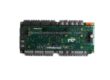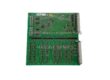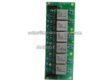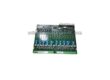
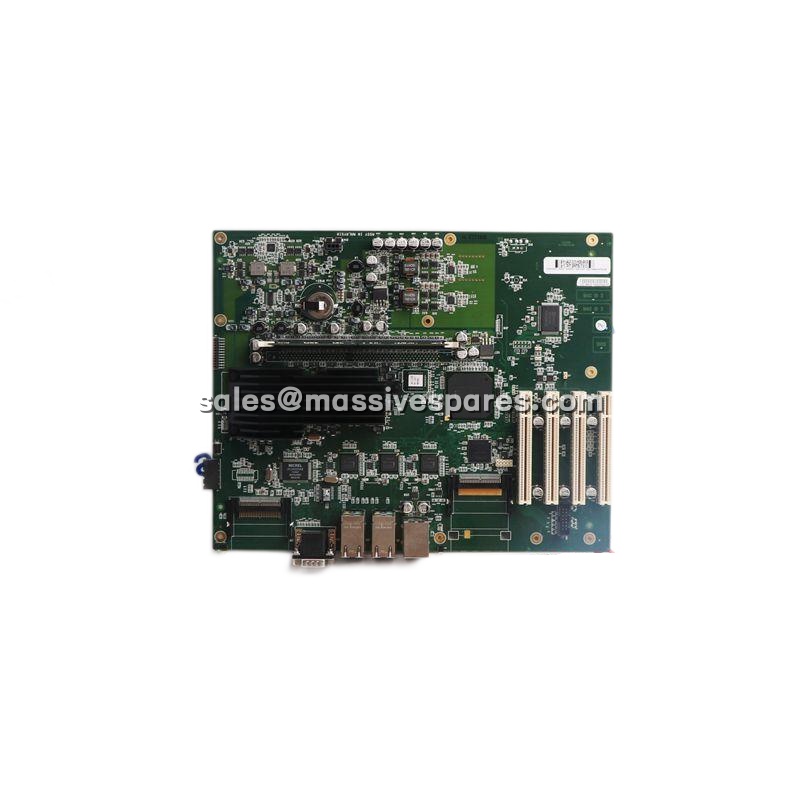
Technical Specifications
| Parameter Name | Parameter Value |
|---|---|
| Product Model | ABB 6215BZ10000 |
| Alternate / Revision Model | ABB 6215BZ10000A (later hardware revision of the same I/O transfer module) |
| Manufacturer | ABB (Taylor Instruments heritage) |
| Product Type | SC I/O Transfer Module, I/O XFER module, interface and data transfer card |
| System Platform | ABB MOD 300 / Advant MOD 300 Distributed Control System, SC controller family |
| Product Family | ABB MOD 300 SC Controller |
| Primary Function | Transfer and exchange of I/O data between the SC controller subsystem and the associated I/O boards or remote I/O stations |
| Typical Supply Voltage | 24 V DC (commonly documented range approximately 20.4 V DC to 28.8 V DC) |
| Communication Interface | RS-485 serial link on the SC I/O side |
| Supported Protocol | Modbus RTU as documented for third-party and host integration |
| Maximum Data Rate | Up to 1 Mbps at the physical layer; typical field configurations run 9600 to 115200 bps |
| Electrical Isolation | Galvanic isolation between controller bus side and field I/O side, commonly specified at 1500 V AC or better |
| Signal Handling | Digital and analogue process signal transfer, with three-way separation of input, output and supply where applicable |
| Standards Compliance | Designed to industrial EMC requirements, including IEC 61000-4-4 electrical fast transient immunity |
| Status Indication | Power, run and fault or communication status LEDs on the front panel |
| Configuration | Address and parameter setting by on-board DIP switches or jumpers, plus system software configuration |
| Mounting | Plug-in card for the MOD 300 SC card file; DIN rail mounting where a separate housing is used |
| Protection Rating | IP20, for installation inside a control cabinet |
| Operating Temperature | -20°C to +70°C as commonly documented; 0°C to +60°C in some MOD 300 cabinet ratings |
| Storage Temperature | -40°C to +85°C |
| Approximate Dimensions | 152 mm x 102 mm x 254 mm (varies with housing and revision) |
| Approximate Weight | 1.4 kg |
| Country of Origin | Sweden or United States depending on production batch |
| Product Lifecycle Status | Discontinued and obsolete; supplied as new surplus, refurbished or tested used spare |
Main Features and Advantages
Purpose-built for the MOD 300 architecture rather than adapted to it: The ABB 6215BZ10000 is not a general-purpose gateway pressed into service; it is a member of the MOD 300 SC card set, matching the card file mechanics, backplane signalling and data-handling conventions of the controller it serves. That native fit means no protocol translation box, no external power supply arrangement and no custom wiring harness, which is exactly what matters when a plant has to restore a failed loop during an unplanned outage.
Isolation that protects the most expensive card in the rack: A distributed control system fails in one of two ways on the electrical side — it stops seeing the process, or it stops being reliable because noise and ground faults creep into the controller. The isolation barrier provided by the ABB 6215BZ10000 addresses the second failure mode, holding the field side’s transients and potential differences away from the controller bus. For plants where I/O cables run hundreds of metres through cable trays shared with motor power, this barrier is a primary reason the control system stays stable.
Serial integration for mixed-vendor environments: With RS-485 and Modbus RTU documented on the module, the ABB 6215BZ10000 can serve as the point where an ABB MOD 300 installation exchanges data with non-ABB equipment, whether that is a supervisory system, a PLC, an analyser package or a package-unit controller. This is one of the most common reasons the module appears in retrofit projects: it lets an old controller keep its original I/O while still delivering data upward to a modern historian or SCADA layer.
Diagnostics designed for a control room at night: Front-panel power, run and fault or communication LEDs give a technician an immediate read on whether the module is alive, whether it is cycling data and whether the link has failed. On a legacy system where diagnostic software may be limited or the original engineering station is long gone, those simple indicators are often the fastest path from symptom to cause.
A practical answer to obsolescence: Because the ABB 6215BZ10000A revision and the base ABB 6215BZ10000 share function and form, plants can standardise on one spare part number across card files, and because the module is a plug-in card, replacement does not require re-terminating field wiring. Combined with ABB’s refurbished hardware and modernisation programmes, holding this module in stock extends the viable life of an installed MOD 300 system by years without a full migration.
Application Field
The ABB 6215BZ10000 is found in industries that installed MOD 300 in the 1980s and 1990s and are still running it today, which in practice means continuous process plants with long asset lives. Thermal power generation is the largest of these: boiler control, turbine auxiliary systems, feedwater and combustion control loops, and balance-of-plant sequencing on units where the MOD 300 SC controllers were commissioned decades ago and continue to perform reliably.
In chemical, petrochemical and refining service, the ABB 6215BZ10000 supports continuous and batch control of reactors, distillation columns, compressors and utility systems, and the module’s RS-485 and Modbus capability is often what allows those older controllers to feed data to a newer plant information system or to hand off supervision to a modernised HMI layer. Pulp and paper mills, metals plants, cement works and water and wastewater treatment facilities similarly rely on the module to keep legacy card files communicating.
Two scenarios bring the ABB 6215BZ10000A into focus most often. The first is corrective maintenance: a card file develops a data transfer fault, an entire I/O group goes stale on the operator display, and the fastest recovery is to swap the transfer module for a tested spare. The second is planned life extension: a plant has budgeted to keep MOD 300 running for another five to ten years while it stages a migration, and building a spares holding around the modules most likely to fail is central to that plan. In both cases the value of the ABB 6215BZ10000 is measured in avoided downtime on process units that cannot simply be stopped.