Product Overview
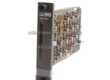
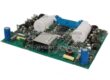
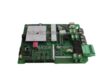
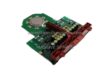
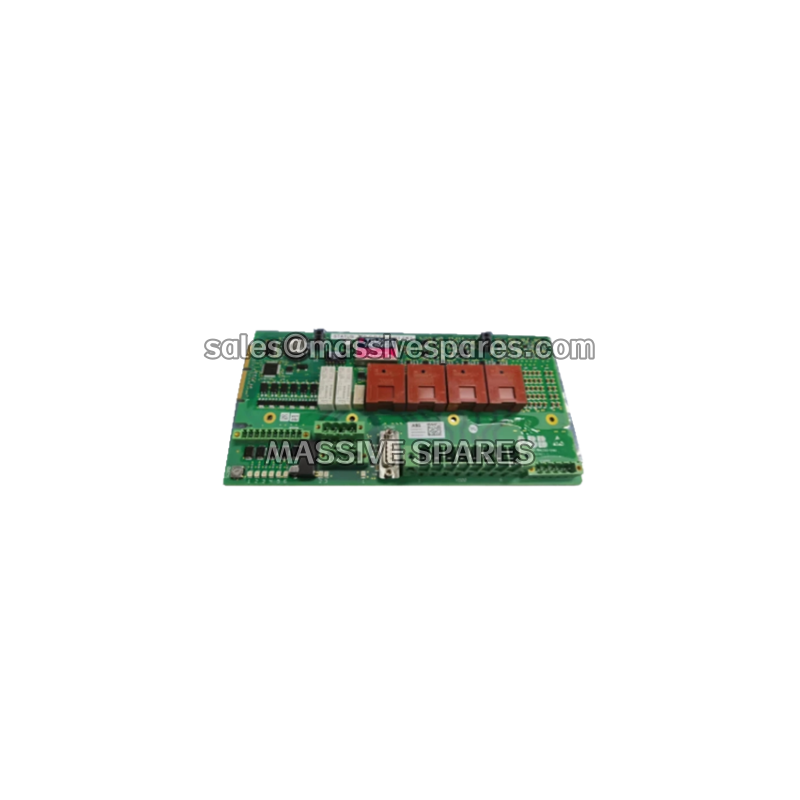
The ABB 3BHE019958R0101, commercially designated as the UAD206A101, is a specialized communication and I/O interface module engineered for ABB‘s power electronics control platforms. This plug-in PCB assembly serves as a critical data bridge between ABB’s central control processors and external plant systems, enabling reliable serial communication and signal conditioning within demanding industrial environments . The ABB UAD206A101 is primarily deployed in UNITROL excitation systems, AC800PEC power electronics controllers, and ACS5000 medium-voltage drive cabinets, where it facilitates protocol conversion and I/O signal processing for generator control, drive coordination, and process automation .
As a dual-role module, the ABB 3BHE019958R0101 combines communication gateway functionality with local I/O handling, eliminating the need for separate gateway and I/O cards in space-constrained control racks . The module communicates with the host controller through ABB’s proprietary backplane architecture while providing RS-232/RS-485 serial interfaces for external device connectivity . This architectural approach ensures deterministic data transfer and reduces external wiring complexity compared to standalone protocol converters .
The ABB UAD206A101 operates on 24V DC supplied through the host rack backplane, drawing approximately 15 watts under typical load conditions . Its robust construction includes optical isolation on communication ports, EMC filtering, and diagnostic LED indicators for power, heartbeat, and communication status . The module’s design prioritizes reliability in electrically noisy environments such as excitation cabinets and drive control rooms, where signal integrity is paramount for maintaining stable generator excitation and motor control .
Technical Specifications
| Parameter Name | Parameter Value |
|---|---|
| Product Model | ABB 3BHE019958R0101 (UAD206A101) |
| Manufacturer | ABB |
| Product Type | Communication I/O Module / Control Interface Unit |
| Compatible Systems | AC800PEC, ACS5000, UNITROL 6000, MEGADRIVE-LCI |
| Supply Voltage | 24V DC (18–30V range, backplane-powered) |
| Power Consumption | Approximately 15W |
| Communication Ports | 2 × RS-232/RS-485 |
| Supported Protocols | Modbus RTU/ASCII, ABB proprietary |
| Baud Rate | 300 bps – 115.2 kbps |
| Isolation Voltage | 500V AC typical |
| Operating Temperature | -20°C to +70°C |
| Protection Rating | IP20 (cabinet-mounted) |
| Country of Origin | Switzerland / Sweden |
Main Features and Advantages
Dual-Role Communication and I/O Integration: The ABB 3BHE019958R0101 consolidates communication gateway and local I/O functions into a single plug-in module, significantly reducing rack slot requirements in AC800PEC and UNITROL cabinets . A typical ACS5000 drive installation would otherwise require separate modules for Modbus communication and auxiliary I/O handling; the ABB UAD206A101 performs both functions, simplifying system architecture and reducing component count .
Backplane-Powered Architecture: Unlike external protocol converters that require independent power supplies and add wiring complexity, the ABB 3BHE019958R0101 draws power directly from the host rack backplane . This design eliminates external power cabling, reduces installation time, and ensures the module is protected by the same power conditioning infrastructure that serves the main controller.
Optical Isolation and EMC Protection: The ABB UAD206A101 incorporates optical isolation on communication ports with typical isolation voltage of 500V AC, protecting sensitive processor electronics from ground loops and voltage transients . Combined with onboard EMC filtering, this isolation ensures reliable data transmission even when the module operates adjacent to high-power switching equipment characteristic of excitation and drive cabinets .
Comprehensive Diagnostic Indicators: The ABB 3BHE019958R0101 features front-panel LED indicators for power status, heartbeat, and active communication links on individual channels . These diagnostics enable maintenance personnel to quickly assess module health and identify fault conditions without requiring external test equipment.