Description
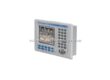
The Allen-Bradley 2098-DSD-020X is a single-axis digital servo drive from the Ultra 3000 family, built by Rockwell Automation for precise closed-loop control of 200 V-class rotary servo motors. It is the “X” variant — the one with built-in indexing — so the drive can store and run pre-configured motion profiles from its own memory rather than leaning on a controller for every move.
In plain terms, the 2098-DSD-020X closes three loops at once: current, velocity and position. Give it a motor and a feedback device, and it will hold torque through a load disturbance, hold speed through a belt tension change, and land a position within a registration window that a PLC scan would be too slow to catch. That is why it still shows up on filling, cutting, labeling, winding and assembly machines that were commissioned a decade ago and are still running two shifts.
Application Scenarios
A converter-line OEM in southern China was retrofitting a 1.5 kW unwind axis on an old slitter. The original analog drive was doing its best impression of a servo: drift on the tension dancer, a visible weave at high speed, and a registration mark that wandered just enough to scrap the last 40 metres of every roll. The PLC was not the problem — a 10 ms scan could not argue with a 2 ms mechanical event.
The fix was to move the argument to the drive. A 2098-DSD-020X took the encoder feedback directly, ran the velocity loop at 250 µs, and executed a stored index profile for the splice-and-cut cycle. The PLC kept its job — start, stop, product recipe — while the drive owned the microseconds in between. Within a shift the edge weave was gone, the reject count dropped into the noise, and the operator’s “nudge” button stopped being the most-used control on the panel. The drive did not make the machine smarter. It made the machine faster than the PLC could blink.
Parameter
| Main Parameters | Value / Description |
|---|---|
| Product Model | 2098-DSD-020X — Ultra 3000 Digital Servo Drive, indexing variant; the “-DN” suffix adds DeviceNet, the base “X” is serial-only |
| Manufacturer | Allen-Bradley, Rockwell Automation — USA design origin, Ultra 3000 platform |
| Product Category | Single-axis digital servo drive / servo amplifier (panel mount, IP20 open-frame) |
| AC Input | 100–240 V rms, single-phase, 47–63 Hz; absolute allowable range 88–265 V rms (±10%) |
| Input Current | 18 A rms nominal at 230 V; inrush 100 A for Series A/B, 20 A for Series C — inrush limiting engages within 3 s of line removal |
| Continuous Output | 10 A (0-peak) / 7.1 A rms, three-phase 0–400 Hz; enough for the 200 V 1.0–2.0 kW motor class |
| Peak Output | 30 A (0-peak) / 21.2 A rms for the acceleration window; this is where a 1.5 kW motor earns its keep on a flying shear |
| Continuous Power | 1.0 kW at 115 VAC input, 2.0 kW at 230 VAC input — match the number to your supply, not to the motor nameplate hope |
| DC Bus | 1880 µF capacitance, 400 VDC overvoltage trip threshold, 51 J energy absorption at 230 V (125 J at 115 V) |
| Control Architecture | Current / velocity / position triple closed-loop; digital PID with feed-forward; velocity-loop update 250 µs |
| Indexing | Profiles stored in drive memory — accel, slew, decel, target position and dwell — triggered by a digital input or serial command |
| Feedback Accepted | Incremental A-quad-B, sine/cosine encoder, resolver-option path; external encoder input A-quad-B, Step/Direction, CW/CCW at up to 2.5 MHz |
| I/O | 8 optically isolated digital inputs, 4 isolated N.O. relay outputs (30 VDC max, 1 A max) — interlocks and “in-position” without a rack of cards |
| Serial Port | CN3, 9-pin female D-Sub; RS-232/422/485 selectable, 1200–38 400 baud; used for commissioning, jogging and point-to-point commands |
| Operating Envelope | 0 to +55 °C, 5–95% RH non-condensing; 1000 m (3280 ft) no derating per the 230 V datasheet family |
| Shock & Vibration | 15 G operating shock (3 pulses, 11 ms), 2.5 G vibration capability — survives the cabinet that rattles |
| Form Factor | 198.12 × 144.27 × 98.1 mm (7.8 × 5.68 × 3.89 in), approx. 2.1 kg (4.6 lb); panel-mount, heatsink to the outside air |
| Protection & Fusing | Bus overvoltage, overcurrent, undervoltage, overtemperature, motor overload, feedback-loss detection; FNQ-R-20 Class CC or LPJ-20SP Class J branch protection |
Technical Principles and Innovative Values
Innovation Point 1 — The indexing lives in the drive, not in the controller. The “X” in 2098-DSD-020X is the whole story. A trigger on a digital input starts a stored profile — move 12 450 counts at 3000 mm/s, decel to a dwell, wait for the mark — and the drive executes it on its own clock. For a machine with a small PLC, a slow scan, or no motion coordinator at all, this turns a £2000 control upgrade into a wiring change. It also means the profile still runs during a momentary comms glitch, which is when you need it most.
Innovation Point 2 — A 250 µs velocity loop is a mechanical dampener you can tune. Most registration errors are not position errors; they are velocity errors that grew up. The digital PID in the 2098-DSD-020X updates the velocity loop every 250 microseconds and adds feed-forward, so the drive is already compensating for the load before the feedback says it moved. Add the built-in filters and the auto-tune path, and you spend less time listening to the machine hum a tune it was not hired to sing.
Innovation Point 3 — Three-phase output from a single-phase wall. The front end is a single-phase 100–240 V input, but the motor sees a true three-phase 0–400 Hz waveform. That matters in older plants where a three-phase supply to every cabinet is a fantasy. The 1880 µF bus and the 400 VDC overvoltage clamp are what let the drive absorb a decel without screaming, and the 51 J rating at 230 V tells you exactly how much regen energy the internal path will swallow before you need to talk about an external shunt.
Innovation Point 4 — Feedback agnosticism, within reason. The 2098- will take an incremental encoder, a sine/cosine pair, or resolver-type feedback, and the auxiliary input accepts A-quad-B, step/direction or CW/CCW at up to 2.5 MHz. That is a long way of saying you can keep the motor you already have, the encoder the OEM glued on, and the master-axis pulse train from the old controller, and none of them has to be the thing you redesign.
Innovation Point 5 — Stand-alone field logic. Eight isolated inputs and four relay outputs sound quaint next to EtherNet/IP, but on a retrofit they are the difference between “we need a new I/O rack” and “we need an afternoon.” Door interlock, brake released, in-position, torque limit reached, profile complete — all resolved at the drive and available to the PLC as a single bit. The 2098- earns its cabinet space twice.