Application Scenarios
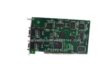
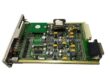
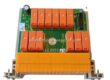
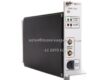
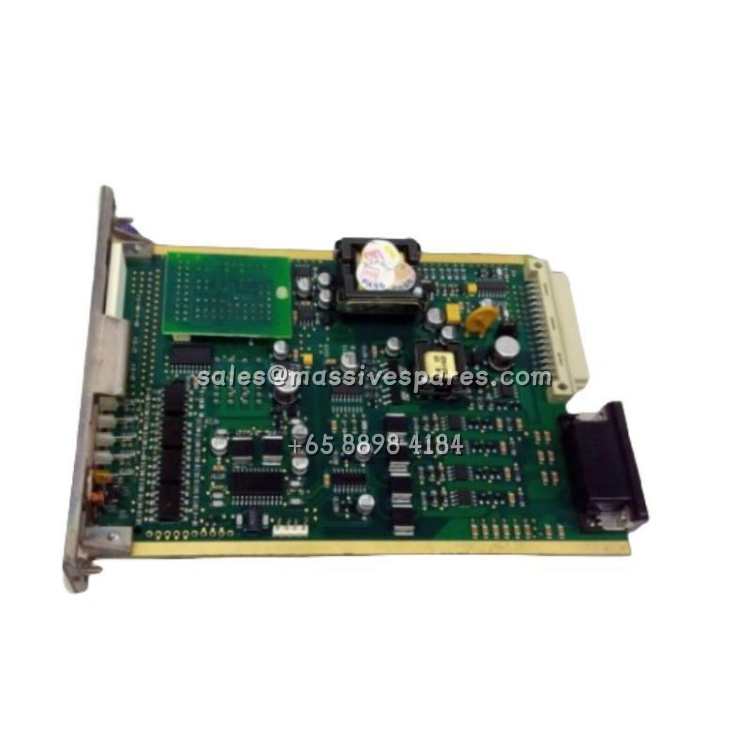
In an offshore platform’s gas detection cabinet, the HONEYWELL 05704-A-0145 monitors four independent detector loops covering wellhead area hydrocarbon sensors, confined-space oxygen deficiency monitors, and process deck hydrogen sulfide transmitters. Each channel must not only display a reading but also trigger the correct alarm level—A1 for warning, A2 for high alarm, A3 for critical shutdown—without cross-talk between channels or false trips caused by radio frequency interference from nearby communication equipment.
The card’s value becomes evident during sensor calibration. Without an inhibit function, routine zero and span adjustments would trigger plant-wide alarms and potentially activate fire suppression systems. The 05704-A-0145 provides per-channel inhibit capability, allowing technicians to place individual loops in maintenance mode while the remaining channels continue active monitoring. This operational flexibility is not a convenience feature—it is a practical necessity in facilities where calibration windows are limited and unnecessary shutdowns carry measurable production cost.
Parameter
| Main Parameters | Value/Description |
|---|---|
| Product Model | 05704-A-0145 |
| Manufacturer | Honeywell Analytics (Sieger / Zellweger product line) |
| Product Category | Four-Channel Gas Detection Control Card (4–20 mA variant) |
| System Platform | Honeywell / Sieger System 57 (5704 rack family) |
| Input Signal Range | 0 to 25 mA linear |
| Loop Supply Output | Isolated 24 V ±5%, 25 mA maximum |
| Maximum Line Resistance | 500 Ω including sensor |
| Isolation Breakdown Voltage | > ±50 V DC to system 0 V |
| Supply Voltage | 18 V to 32 V DC (rack backplane) |
| Power Consumption | 7.5 W typical, 8.3 W maximum |
| Operating Temperature | -5°C to +55°C |
| Dimensions | 3U high × 25 mm wide × 172 mm deep |
| Weight | Approximately 165–170 g |
A specification note: Supplier data for the 05704-A-0145 shows variance across operating temperature ranges (-40°C to +70°C in some listings) and power consumption figures. The specifications above reflect the most consistent values associated with the System 5704 4–20 mA card variant. Purchasers should verify the physical label and installed rack configuration before ordering, as this part number is obsolete and multiple listings conflate specifications from unrelated Honeywell products.
Technical Principles and Innovative Values
Innovation Point 1: Four Independent Channels in a Single 1-Inch Slot. The 05704-A-0145 condenses four complete gas detection control loops into a 25 mm wide card format. In a legacy System 57 subrack with limited slot count, this density directly determines how many detection points a single cabinet can support. Facilities expanding gas monitoring coverage without adding physical rack infrastructure rely on this channel density to meet safety case requirements.
Innovation Point 2: Integrated Loop Power with Isolation. The card supplies isolated 24 V loop power to each connected transmitter, eliminating the need for external power supplies distributed across the cabinet. The >50 V isolation barrier between the field loop and system ground prevents ground loops from corrupting readings when transmitters are grounded at different potentials—a common condition in offshore and petrochemical installations where structural grounding points vary.
Innovation Point 3: Per-Channel Alarm and Inhibit Logic. Each of the four channels maintains independent A1, A2, and A3 alarm thresholds, with front-panel LED indication for each level. The inhibit function allows individual channels to be removed from the alarm logic during calibration or sensor replacement without affecting adjacent loops. This granularity matters in safety systems: a calibration-induced trip on an unrelated channel can erode operator trust in the detection system, leading to inhibited alarms during actual hazardous conditions.