Product Overview
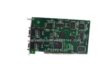
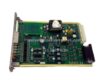
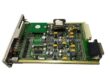
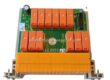
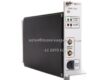
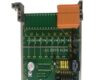
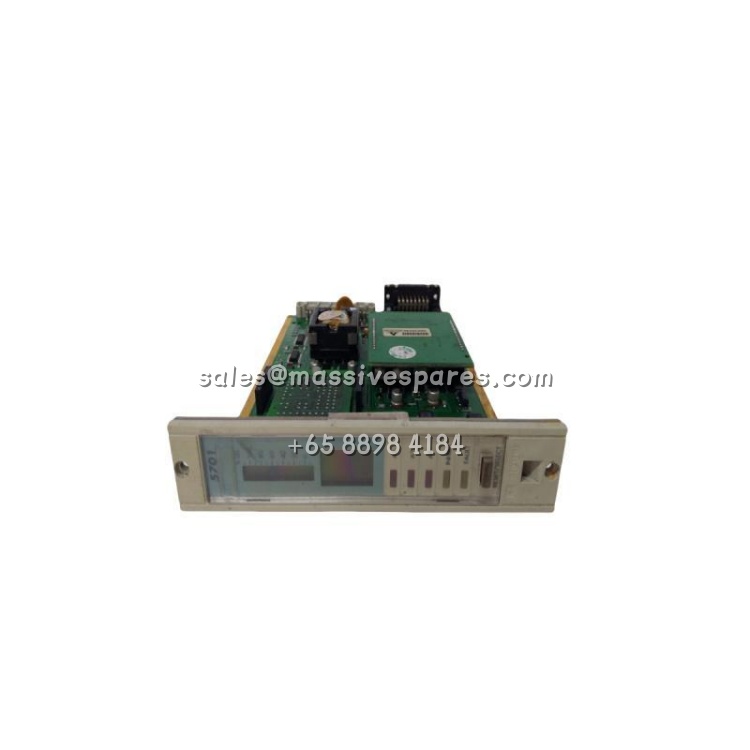
The HONEYWELL 05701-A-0302 is a single-channel control card belonging to Honeywell’s System 57 gas detection platform, specifically configured for catalytic (flammable gas) sensor applications. As the intelligent interface between a field-mounted gas detector and the central monitoring architecture, the HONEYWELL 05701-A-0302 handles sensor excitation, signal conditioning, alarm threshold evaluation, and fault diagnostics for one complete detection loop. The card occupies a single slot in a System 57 rack and provides local display, LED status indication, and relay outputs for alarm and fault signaling.
Within the System 57 ecosystem, the HONEYWELL 05701-A-0302 is distinguished from its sibling model 05701-A-0301 by its dedicated support for catalytic bead sensors rather than 4-20 mA transmitters. This specialization makes the card particularly suited to combustible gas monitoring, where catalytic sensors remain a proven and cost-effective detection method. The HONEYWELL 05701-A-0302 stores its configuration parameters in EEPROM, ensuring that alarm setpoints and calibration data survive power interruptions without requiring re-entry.
The card’s front panel provides a multi-segment bar graph alongside a four-character alphanumeric display, giving operators immediate visibility into gas concentration and channel status. Three user-configurable alarm levels (A1, A2, A3) allow graduated warning and trip thresholds, while a dedicated fault relay flags sensor open-circuit, short-circuit, or internal hardware failures. For facilities maintaining legacy System 57 installations in oil and gas, chemical processing, or wastewater treatment, the HONEYWELL 05701-A-0302 represents a direct-fit replacement that preserves the original safety architecture without requiring system redesign.
Technical Specifications
| Parameter Name | Parameter Value |
|---|---|
| Product Model | HONEYWELL 05701-A-0302 |
| Manufacturer | Honeywell Analytics (formerly Zellweger Analytics) |
| Product Type | Single Channel Control Card (Catalytic) |
| Host System | Honeywell System 57 (5701/5704 series racks) |
| Compatible Sensor Type | Catalytic bead (flammable gas) |
| Input Power | 18–32 VDC (via System 57 backplane) |
| Power Consumption | Typically 3.75 W (including catalytic sensor) |
| Display | 25-segment analog bar graph + 4-character digital + 4-character message |
| Alarm Levels | 3 configurable (A1, A2, A3) |
| Relay Outputs | 3 alarm relays + 1 fault relay (SPDT) |
| Analog Output | Optional isolated 4-20 mA module |
| Memory | EEPROM for configuration retention |
| Electronic Drift | < ±2% per 6 months |
| Operating Temperature | -5°C to +55°C |
| Dimensions | 17.0 × 2.5 × 11.2 cm |
| Weight | Approximately 0.165 kg |
Main Features and Advantages
Dedicated catalytic sensor support with proven detection reliability: The HONEYWELL 05701-A-0302 is engineered specifically for catalytic bead sensors, which remain the standard for combustible gas detection in many industrial environments. Unlike general-purpose input cards that must accommodate multiple signal types, this dedicated design allows the card to apply sensor-specific linearization and temperature compensation, contributing to measurement stability. The catalytic detection method is well understood by safety engineers and maintenance technicians, simplifying calibration procedures and spare-parts decisions in facilities where System 57 has been the standard for decades.
Multi-level alarm architecture with independent fault monitoring: Each HONEYWELL 05701-A-0302 provides three independently configurable alarm setpoints, enabling facilities to establish graduated response protocols—an early warning at A1, a higher-level alert at A2, and a trip or shutdown command at A3. The dedicated fault relay operates separately from the alarm relays, meaning that a sensor failure or wiring fault is flagged as a distinct condition rather than being conflated with a gas alarm. This separation is critical in safety instrumented systems, where operators must distinguish between “gas present” and “detection loop compromised” to take appropriate action.
EEPROM configuration retention and low drift: Configuration parameters, including alarm setpoints and calibration constants, are stored in EEPROM, eliminating the need for battery backup and ensuring that settings survive power cycles. The card’s electronic drift specification of less than ±2% over six months reduces the frequency of mandatory recalibration, lowering maintenance labor costs in installations with dozens of detection channels. The front-panel push-button allows alarm reset and card selection without requiring a separate engineering terminal, streamlining routine operations.