Product Overview
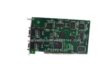
The Woodward 5501-470 is the central processor module of Woodward’s NETCON/MicroNet Simplex control architecture — the card that actually executes the fuel-control law, the start-up sequencer, the overspeed-vote logic and the protection interlocks that sit between a turbine and a safe shutdown. Architecturally it is a CPU_040-class module: a dedicated control processor on a VMEbus-style MicroNet backplane, surrounded by I/O, transceiver and power modules that it commands but does not emulate. In a platform where a missed scan deadline is measured in rotor revolutions rather than milliseconds, the Woodward 5501-470 is the defining element of the system’s determinism.
What distinguishes this specific part from its siblings is deliberate subtraction. The Woodward 5501-470 ships without LL (Low-Level) memory, which means the boot-critical and fail-safe storage path is handled by the rest of the chassis configuration rather than by an onboard non-volatile bank. That makes it the correct fit for Simplex racks already wired to that topology — and the wrong fit for a rack expecting the LL-equipped variant. Woodward also fitted the module with an EMI filter, a detail that matters far more than the datasheet line suggests. Turbine skids live next to ignitors, contactors, VFDs and 125 VDC contactor coils; a processor that cannot reject that common-mode trash will produce faults that look like field instruments and survive every I/O replacement.
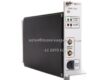
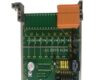
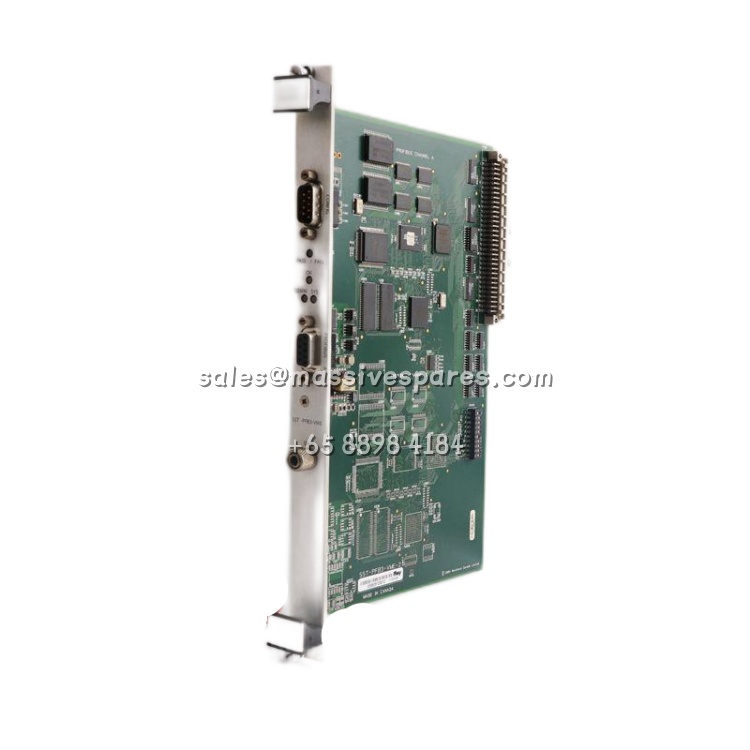
Operationally, the Woodward 5501-470 presents a small, honest front panel: status LEDs for power, run, fault and communications, a 9-pin RS-232 service port and a manual reset. There is no auto-reboot, by design. A controller that silently restarts after a watchdog trip is a liability in a protection system; the manual-reset behaviour forces the event into the log and in front of an operator. Configuration and application loading are done through Woodward’s MicroNet toolchain (GAP/Coder-era application images), and the module itself carries no application — which is why a replacement Woodward 5501-470 is harmless until the verified application is reloaded onto it. For plants maintaining a proven control scheme, that separation is the feature: new hardware, identical logic, no surprises.
Technical Specifications
| Parameter | Value |
|---|---|
| Product Model | 5501-470 |
| Manufacturer | Woodward (Woodward Governor Company, Fort Collins, CO, USA) |
| Product Type | CPU Processor Module (NETCON CPU_040) |
| Product Family | Woodward NETCON / MicroNet Simplex |
| Processor | CPU_040 (Motorola 68040-class, 32-bit) |
| On-Board Memory | 470 KB typical application memory |
| LL Memory | Not installed (w/o LL Memory variant) |
| EMI Filtering | Integrated EMI filter |
| Backplane Interface | VMEbus-style MicroNet system backplane (I/O & comms) |
| Front-Panel Service Port | 1 × RS-232, 9-pin D-Sub |
| Reset | Manual reset button (no automatic restart) |
| Status Indicators | Power, Run, Fault, Comms LEDs |
| Hot-Swappable | No — chassis power-down required for replacement |
| Supply Voltage | 5 VDC from MicroNet backplane |
| Power Consumption | ~8–10 W |
| Field-to-Control Isolation | 1500 VAC |
| Operating Temperature | -40 °C to +85 °C |
| Storage Temperature | -55 °C to +95 °C |
| Humidity | 5%–95% RH, non-condensing |
| Shock / Vibration | IEC 60068 rated |
| Form Factor | 3U MicroNet Eurocard rack module |
| Approvals | CE, UL; LRS / DNV / ABS / ATEX per revision |
| Lifecycle Status | Legacy / discontinued; new-surplus and tested-refurbished only |
Main Features and Advantages
A deterministic core, not a general-purpose computer:
The Woodward 5501-470 earns its place by doing one job with a fixed budget: run the control loop on time, every time. Because the CPU_040 executes against the MicroNet backplane rather than a GPOS thread scheduler, scan jitter stays inside the envelope the application was tuned for. On a gas turbine, that is the difference between a fuel valve command that arrives with the rotor angle and one that arrives a sample late and excites the wrong mode.
Memory option discipline:
The absence of LL memory on the Woodward 5501-470 is a compatibility statement, not a defect. NETCON/Simplex configurations were built around specific memory topologies, and mixing an LL and a non-LL CPU into the same logical slot changes the failure and recovery path. Specifying the correct variant keeps the startup-sequence behaviour, the watchdog semantics and the dump/restore procedure exactly as the original design validated them.
EMI hardening where the noise actually lives:
Turbine control cabinets are electrically hostile. The integrated EMI filter on the Woodward 5501-470 suppresses the conducted transients that ride in on the backplane and the serial service line — the kind of interference that produces intermittent comms drops and apparently random bit errors. Combined with 1500 VAC field-to-control isolation and a conformal-coated industrial build, the module is sized for a sealed, fan-light cabinet rather than a clean bench.
Manual reset is a safety feature:
A CPU that auto-recovers can hide a recurring exception behind a clean front panel. The Woodward 5501-470 forces a human decision after a processor fault, which is exactly what protection-system discipline calls for. The RS-232 front port then gives the commissioning engineer a direct, cable-level path to pull diagnostics without disturbing field wiring or the backplane.
Applications survive the hardware:
The module stores no plant-specific control strategy. A replacement Woodward 5501-470 is therefore a known-good blank slate: load the archived application, verify the I/O walk, and the turbine sees the same controller it ran on yesterday. That clean separation is why a CPU swap, properly prepared, is a maintenance event rather than a re-engineering project.