
Description
Application Scenarios
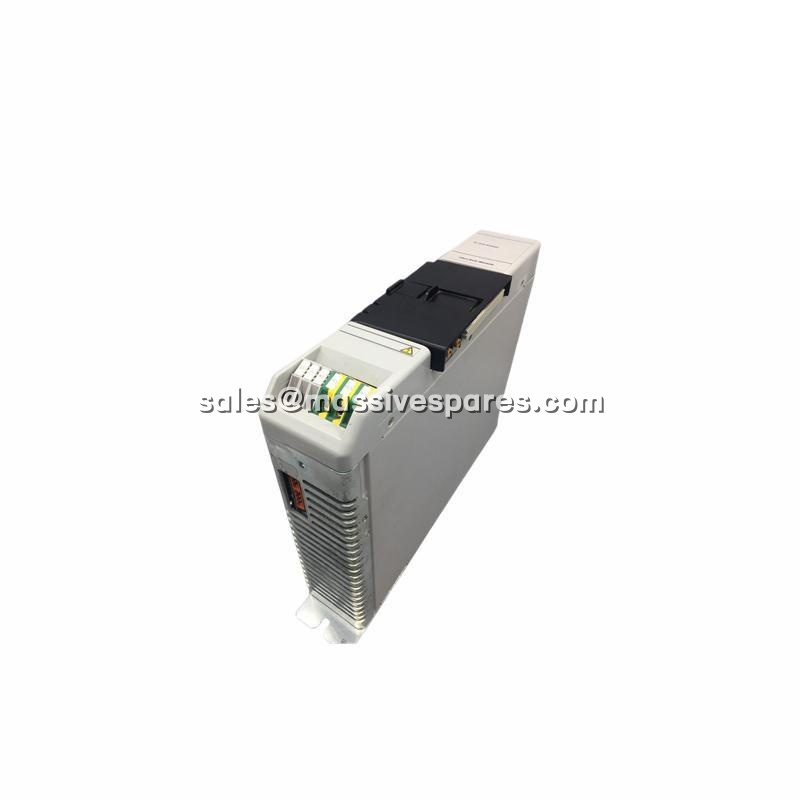
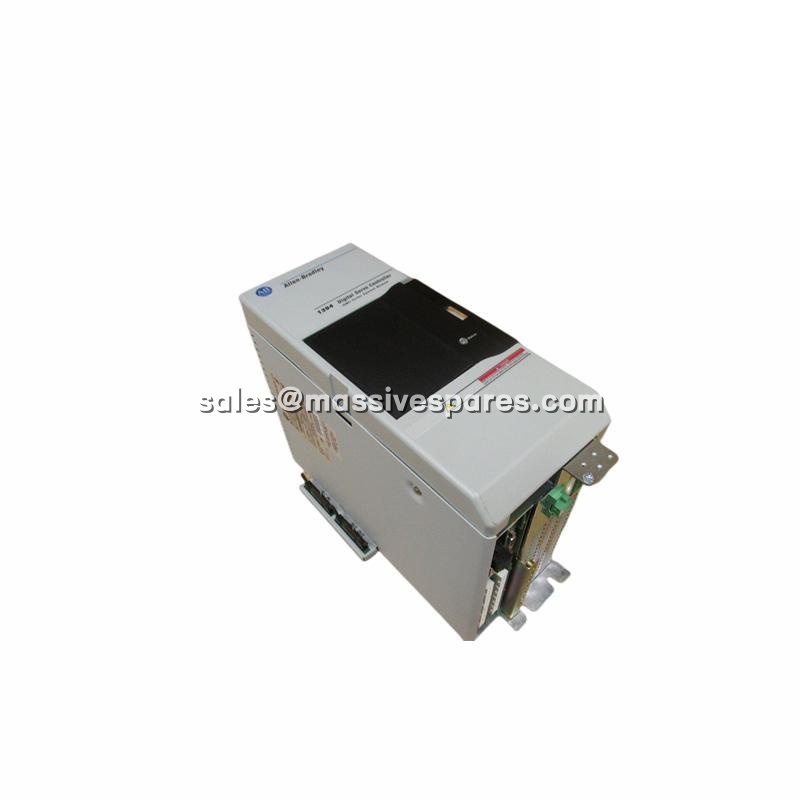
In high-speed packaging and converting lines, servo axes must maintain precise synchronization across multiple stations while responding instantly to registration marks and product changeovers. A common challenge arises when the motion controller and drive are sourced from separate vendors—communication latency, wiring complexity, and compatibility issues inflate commissioning time and degrade throughput. The 1394C-SJT10-T-RL addresses this by integrating the IMC S Class Turbo motion controller directly within the power module, eliminating the traditional gap between control and drive stages. Its native SLC backplane interface enables deterministic data exchange with Allen-Bradley SLC controllers, allowing machine builders to implement electronic cam profiles with up to 13,000 master/slave points without external motion cards. The result is a tighter, faster, and more reliable motion loop that directly improves OEE on high-cycle machinery.
Parameter
| Main Parameters | Value/Description |
|---|---|
| Product Model | 1394C-SJT10-T-RL |
| Manufacturer | Allen-Bradley (Rockwell Automation) |
| Product Category | GMC Turbo System Module / Multi-Axis Servo Drive |
| Power Rating | 10 kW (continuous, at 460V nominal) |
| Rated AC Input Voltage | 324–528V AC, 50/60 Hz, 3-phase |
| Nominal Bus Output Voltage | 530/680V DC (at 380/460V AC input) |
| Continuous Output Current | 14.73 A |
| Peak Output Current | 29.46 A |
| Peak Power Output | 28 kW |
| Efficiency | 99% |
| Motion Controller | IMC S Class Turbo, 32-bit processor, 64K memory |
| Communication Interface | Remote I/O and AxisLink (via RL option) |
| Ride-Through Time | 20 ms (line loss) |
| Internal Shunt Resistor | 200W continuous, 40,000W peak (max 2 sec) |
| Weight | 10.68 kg (23.5 lbs, Series C) |
| Series Enhancements | Smart Power, improved terminations, EMI filtering |
Technical Principles and Innovative Values
Innovation Point 1: Integrated Motion Control Architecture. Unlike conventional drive-plus-external-controller configurations, the 1394C-SJT10-T-RL houses the IMC S Class Turbo motion controller within the same chassis as the power conversion stage. This integration shortens the control loop, reduces cabinet space, and eliminates the separate motion controller hardware cost. The 32-bit processor and 64K memory capacity provide headroom for complex multi-axis programs that would overwhelm the 16-bit/32K Standard GMC variant .
Innovation Point 2: Direct SLC Backplane Link. The 1394C-SJT10-T-RL features a high-speed direct link to SLC 5/03, 5/04, and 5/05 controllers via a 1746-C7 or C9 interface cable. This eliminates the programming overhead typically required for data transfer between motion and logic controllers, allowing engineers to map I/O and status data with minimal configuration .
Innovation Point 3: Series C Enhancements for Modern Installations. The 1394C-SJT10-T-RL incorporates Series C improvements including Smart Power technology, refined termination design, and integrated EMI filtering. These enhancements reduce installation time, improve noise immunity in electrically harsh environments, and simplify compliance with EMC directives .
Innovation Point 4: AxisLink Scalability. When configured with the RL (Remote I/O and AxisLink) option, the 1394C-SJT10-T-RL can participate in a distributed motion network supporting up to 8 controllers and 32 total axes in standard configuration, or 16 controllers and 64 axes in extended-node configurations. Virtual master/slave relationships allow one axis to electronically gear multiple follower axes without hardwired connections .