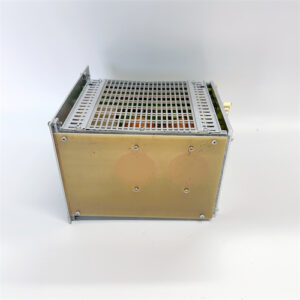
Description
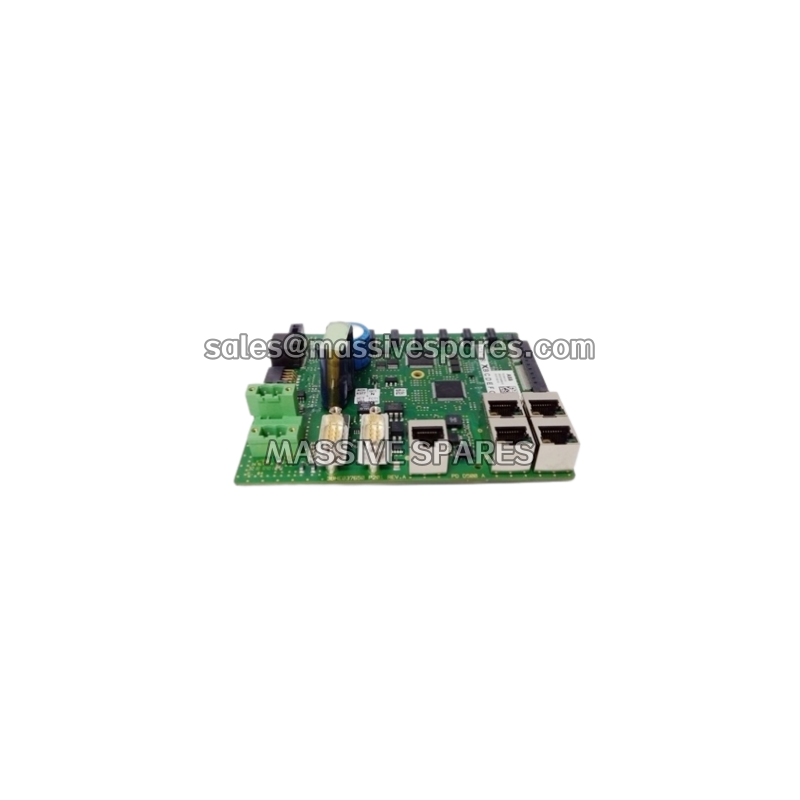
Application Scenarios
A process plant’s control cabinet developed an intermittent watchdog reset during a peak-production period. The maintenance team traced the fault to a rack-mounted ABB board, but the label was partially obscured and the original bill of materials was archived. Rather than guess the replacement, the engineer photographed the board, recorded the cabinet and slot position, captured event logs, and confirmed the material number as 3BHE041464R0101 and the silkscreen name as UD D406 A.
The real value was not simply obtaining a board. It was proving that the spare matched the installed revision, backplane, connector pinout, firmware, and configuration. A mismatched “look-alike” could have powered up yet behaved incorrectly in the control, timing, or interface path. By treating the UD D406 A as a qualified spare rather than a generic electronic component, the plant avoided an extended forced outage and preserved a tested recovery procedure for the next event.
Parameter
| Main Parameter | Value / Description |
|---|---|
| Product Model | UD D406 A (also referenced as UDD406A) |
| Order / Material Reference | 3BHE041464R0101 |
| Manufacturer | ABB-branded; country of origin not verified for this part |
| Product Category | PCB / main-board assembly; industrial automation spare part |
| Form Factor | Rack/card-cage PCB assembly per commercial listings; exact outline unverified |
| Functional Role | Not verified; may be control, interface, signal-conditioning, or timing-related in the host system |
| System Family | Not verified; AC 800PEC and UNITROL 6000 are potential contexts only |
| Supply Voltage | Not verified; do not assume 24 V DC without the board manual |
| Input / Output Channels | Not verified; published reseller counts conflict and must not be merged |
| Signal Types | Not verified; confirm from wiring diagram and terminal assignment |
| Backplane / Bus | Not verified; likely proprietary to the host system |
| Communication / Isolation | Not verified; optical, serial, or backplane interfaces cannot be assumed |
| Operating Temperature | Not verified; maintain the host cabinet within its documented environmental envelope |
| Mounting Method | Not verified; follow the host rack, guide, and ejector/retention design |
| Dimensions / Weight | Not verified; measure the installed board and request an outline drawing |
| Diagnostics | Not verified; record LED status, self-tests, event logs, and serial number |
| Certifications | Not verified; request an ABB declaration of conformity if required |
| Lifecycle Phase | Not verified for this board; request status at the host-product-family level |
Technical Principles and Innovative Values
Innovation Point 1 — A board-level spare is only as valuable as its system context.
Industrial control systems often distribute processing, timing, measurement, and actuation across multiple PCBs. The UD D406 A is therefore not evaluated as a standalone device. Its value appears when it correctly supports the host controller’s signal chain, backplane communication, and deterministic control tasks.
Innovation Point 2 — Revision control replaces “same model” assumptions.
A board’s silkscreen may remain visually identical while its components, FPGA/processor configuration, connector layout, or firmware changes between revisions. The 3BHE041464R0101 ordering string is an essential identifier, but safe interchange also requires the board revision, serial number, and configuration hash. This discipline prevents a board that “fits” from becoming the root cause of a control anomaly.
Innovation Point 3 — Architecture-aware sourcing for power-electronics environments.
ABB’s documented AC 800PEC platform combines CPU and FPGA resources, fast and slow I/O, and fiber-optic interfaces, with control cycles down to 100 µs for fast functions and 25 ns for very-fast functions. UNITROL 6000 provides configurable static or indirect excitation for generators and synchronous motors. If the UD D406 A is installed in such an environment, it should be treated as a revision-specific subassembly—not advertised as an AC 800PEC or UNITROL 6000 product unless ABB documentation confirms the relationship.
Innovation Point 4 — Fault evidence is preserved before the swap.
Replacing a board clears valuable forensic data. Before removing a suspected UD D406 A, qualified personnel should export event logs, transient/fault records, LED status, recent parameter changes, and configuration backups. They should then test supplies, backplane continuity, connectors, field devices, and gate/pulse or communication paths. This turns a reactive replacement into a root-cause process and reduces the risk of repeating the failure.
Innovation Point 5 — Managed obsolescence instead of unsupported “equivalent” claims.
Legacy boards may be unavailable as new, limited in stock, or no longer supported at the system level. The strongest service proposition is therefore traceable sourcing, ESD-controlled handling, matched revision, configuration backup, and a migration assessment. Where the host platform is approaching obsolescence, ABB or an authorized partner should evaluate a retrofit or migration path rather than forcing an obsolete board into continued service.
Application Cases and Industry Value
Case 1 — Legacy excitation or power-electronics cabinet restoration
A utility or heavy-industrial operator maintains a generator excitation cubicle or power-electronics rack with an aging ABB controller. A failed main board interrupts availability, but the complete system schematic, BOM, and firmware are still available. The maintenance team identifies the failed assembly as 3BHE041464R0101 / UD D406 A, confirms the board revision and serial number, and secures a traceable spare.
Before installation, the team performs lockout/tagout, discharges stored energy, verifies an de-energized backplane where required, inspects pins and connectors, and restores a validated configuration. After power-up, it runs self-tests, checks I/O and communication paths, and performs functional tests permitted by the site procedure. The benefit is not an invented efficiency percentage: it is a controlled return to service, preserved event history, and a repeatable outage procedure. This approach is particularly valuable in hydro, thermal, gas, biomass, or large motor-drive applications where a compatible spare is scarcer than the labor to install it.
Case 2 — Process-control spare-parts rationalization
A multi-unit plant discovers that several ABB racks contain boards with incomplete labeling. Procurement had previously bought by photo, resulting in near-miss installations. The plant creates a board-level asset register linking cubicle, rack, slot, 3BHE041464R0101 material number, UD D406 A silkscreen, revision, serial number, firmware, configuration version, and approved spare.
When a fault occurs, the response is faster because the team already knows whether the board is interchangeable, whether a firmware load is required, and whether the swap can occur during a scheduled outage. The business value is lower inventory risk, fewer compatibility errors, and clearer accountability between operations, maintenance, and sourcing. This case is representative: it explains how disciplined lifecycle management creates value around legacy electronics without claiming that the UD D406 A itself has been documented in a specific customer project.