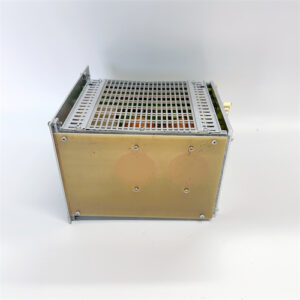
Description
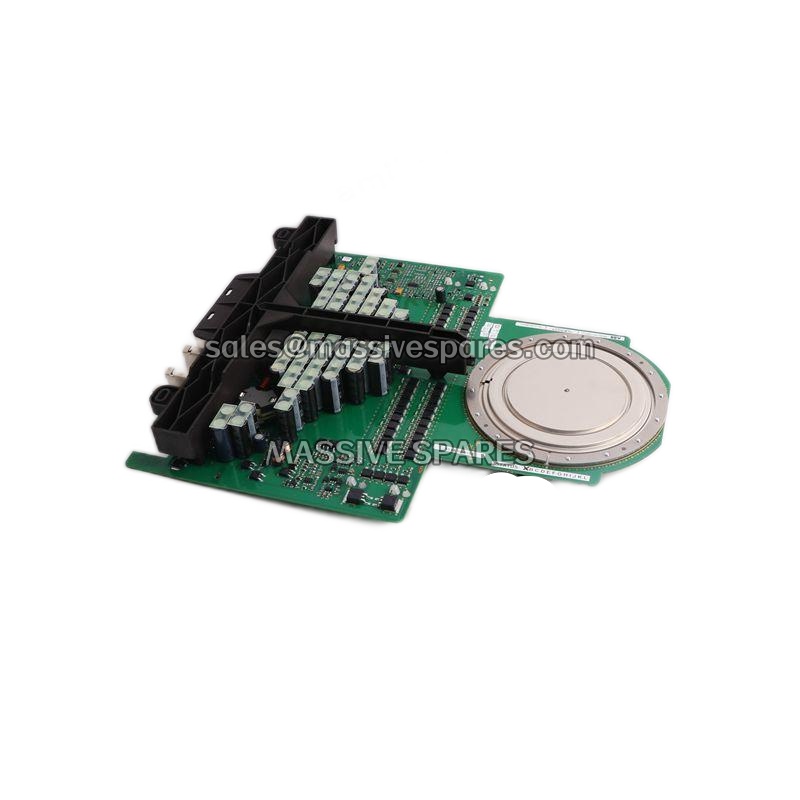
| Main Parameters | Value/Description |
|---|---|
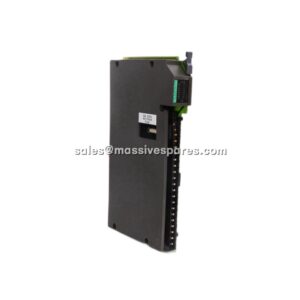
| Product Model | ABB PDD405A101 (3BHE041626R0101) |
| Manufacturer | ABB |
| Product Category | Control Hub / Communication & Signal Distribution Module |
| Primary Application | Power Electronic Control Systems, Excitation, MV Drives |
| Communication Function | High-Speed Signal Routing & Backplane Bus Arbitration |
| Bus Architecture | Proprietary High-Speed Fiber Optic / Parallel Bus |
| Signal Synchronization | Deterministic Timing for Gate Driver Coordination |
| Diagnostic Capability | Channel-Level Fault Detection & Fault Contact Output |
| Isolation | Galvanic Isolation via Fiber Optic Links |
| Operating Temperature | 0°C to +60°C |
| Storage Temperature | -40°C to +85°C |
| Mounting Type | Backplane-Mounted / Subrack Installation |
| Country of Origin | Sweden |
Innovation Point 1: Deterministic Signal Routing Without Variable Skew. The ABB PDD405A101 establishes fixed infrastructure for deterministic signaling patterns, managing active data frames without introducing variable transmission skewing. Unlike general-purpose communication modules that introduce unpredictable latency as network load increases, the ABB PDD405A101 maintains stable backplane bus communication velocity even during multi-channel power conversion sequences. This determinism is critical in high-power drives where gate firing timing directly impacts semiconductor reliability and system efficiency.
Innovation Point 2: Channel-Level Fault Isolation. The ABB PDD405A101 features dedicated diagnostic circuits that monitor the signal line state of each distribution channel independently. If a transceiver path experiences an electrical or optical failure, the hub logs a channel-specific error code, activates a summary fault contact, and isolates the affected line to prevent noise propagation across remaining healthy data channels. This granular fault handling allows maintenance teams to identify and address specific communication paths without disturbing the entire control system.
Innovation Point 3: Firmware Compatibility Architecture. The ABB PDD405A101 relies on matching firmware flash compatibility layers across the drive control array to update timing grids and fault parameters without creating execution drops on the main system processor link. A firmware mismatch disrupts internal translation tables governing backplane communication velocity, causing data packet drops and timing synchronization alarms. When firmware baselines are properly aligned, the hub enables seamless timing grid updates across distributed control nodes.
Innovation Point 4: Fiber Optic Isolation for EMI Immunity. The ABB PDD405A101 interfaces locally via proprietary high-speed fiber optic or parallel bus arrangements to drive gate units. Fiber optic communication provides complete galvanic isolation between the control hub and power stage components, eliminating ground loops and noise coupling that plague copper-based control networks in high-voltage switchyards and power converter cabinets.
Case 1: Medium-Voltage Drive in Mining Operations. A mining processing facility operated a medium-voltage variable frequency drive for ore grinding mills. The drive system experienced intermittent communication faults between the main controller and power stack gate drivers during load transients, causing unexpected shutdowns. Diagnostic logs indicated packet drops and timing synchronization alarms on the backplane communication link. After replacing the faulty communication module with the , the drive achieved uninterrupted operation through the most severe load swings. The control hub’s deterministic signal routing eliminated packet drops entirely, and the facility recorded zero communication-related shutdowns over the following twelve months. Maintenance costs decreased by eliminating emergency callout fees and reducing spare parts consumption.
Case 2: Generator Excitation System Retrofit. A power generation station undertook a retrofit of its aging excitation control system for a 200MW turbine generator. The original communication interface between the excitation processor and power stage thyristor firing circuits lacked adequate diagnostic capability, making fault isolation difficult and time-consuming. The was installed as the central control hub, providing channel-level diagnostic monitoring and deterministic signal distribution. During commissioning, the hub’s diagnostic registers immediately identified a marginal fiber optic connection that would have caused an intermittent fault within weeks. This early detection saved an estimated two days of troubleshooting during a scheduled outage window. Plant engineers noted that the diagnostic visibility transformed their maintenance approach from reactive troubleshooting to proactive condition monitoring.