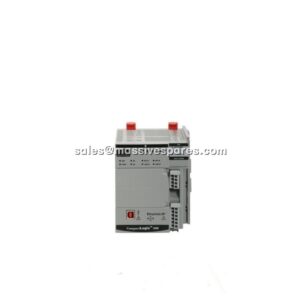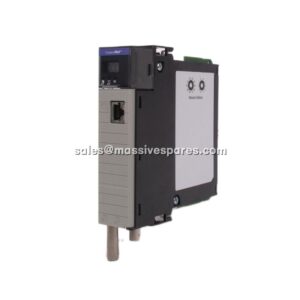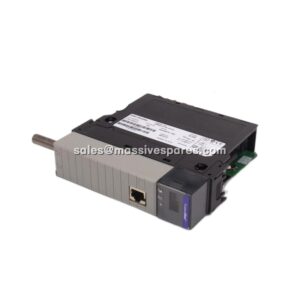

Description
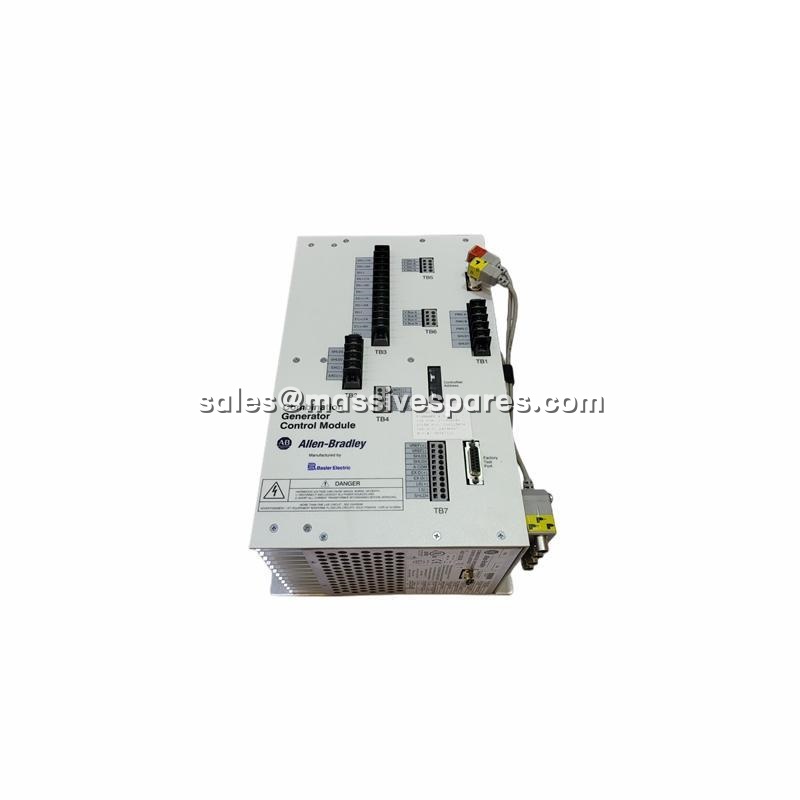
Technical Specifications
| Parameter Name | Parameter Value |
|---|---|
| Product Model | 1407-CGCM |
| Manufacturer | Allen-Bradley (Rockwell Automation) |
| Product Type | Combination Generator Control Module (CGCM) |
| Control Power Supply | 18–32V DC (24V DC nominal) |
| Excitation Output | Pulse-width-modulated, 15A continuous, 30A for 10s forcing |
| Voltage Sensing | 57–208V AC (Single or 3-Phase, True RMS) |
| Current Sensing (CT) | 1A or 5A (3-Phase + Cross-Current) |
| Frequency Range | 20–90 Hz (Generator), 50/60 Hz (PMG) |
| Communication | Redundant ControlNet, RS-232 (Redundancy/Config) |
| Control Modes | AVR, FCR, PF, VAR |
| Protection Functions | 27, 59, 81O/U, 32R, 40, 40Q, 51, 47, V/Hz |
| Operating Temperature | -20°C to +70°C |
| Mounting | Vertical Chassis Mount with Heat Sink |
| Dimensions (WxHxD) | 247.7 mm x 355.6 mm x 209.6 mm |
Main Features and Advantages
Integrated Functionality: The Allen-Bradley 1407-CGCM stands out by combining excitation control, generator protection, synchronizing, and metering into one module. This all-in-one design reduces the need for multiple discrete components, simplifying system architecture and minimizing potential points of failure. The integrated approach not only saves valuable panel space but also streamlines installation and commissioning processes.
Advanced Excitation Control: With support for AVR, FCR, PF, and VAR control modes, the 1407-CGCM offers unparalleled flexibility in managing generator excitation. Its ability to perform soft-start voltage build-up and under-frequency compensation (Volts/Hertz) ensures smooth and stable generator operation, protecting both the generator and connected loads from damaging voltage fluctuations.
Seamless ControlLogix Integration: The Allen-Bradley 1407-CGCM is designed for native integration with ControlLogix platforms via ControlNet. This allows for the seamless exchange of real-time metering data, status flags, and control commands, enabling advanced power management strategies and centralized monitoring through FactoryTalk View or other HMI/SCADA systems. The module’s network-ready architecture eliminates the need for complex protocol converters.
Robust Protection and Redundancy: The module incorporates a comprehensive suite of generator protection functions, including over/under voltage, over/under frequency, reverse power, and loss of excitation. Furthermore, the 1407-CGCM supports redundant configurations, where a standby module can automatically track and take over from a failed primary unit, ensuring maximum uptime for critical power generation assets.