
Description
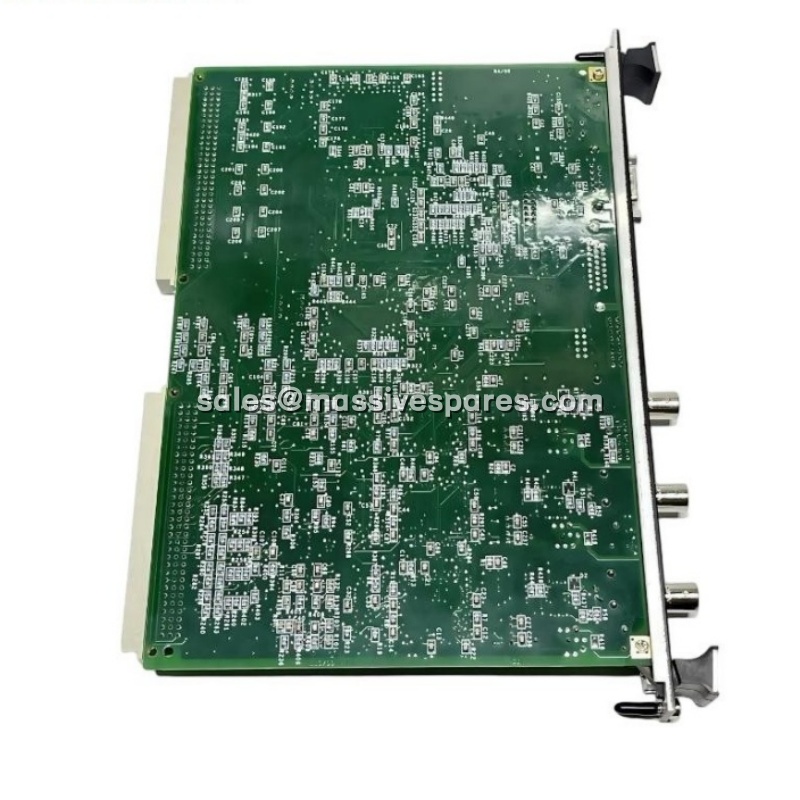
Application Scenarios
A combined-cycle power plant operating a GE Mark VI turbine control system experienced intermittent IONet communication faults during a scheduled inspection. Because the control architecture used triple modular redundant controllers, a single communication disturbance did not immediately trip the unit, but it created a maintenance alert that could not be ignored. By isolating the affected VME rack and testing the GE IS215VCMIH2CB, the technical team confirmed that the VCMI was no longer maintaining stable communication with one IONet segment.
The replacement strategy focused on restoring deterministic controller-to-I/O communication rather than modifying the broader control logic. After installing a verified replacement module and validating the IONet cabling, terminators, and status indicators, the system returned to normal synchronized operation. The case illustrates why the GE IS215VCMIH2CB is often classified as a high-priority spare part: it does not directly control a turbine by itself, but it carries the communication that allows controllers and I/O hardware to work as one system.
Parameter
| Main Parameters | Value/Description |
|---|---|
| Product Model | GE IS215VCMIH2CB |
| Manufacturer | General Electric |
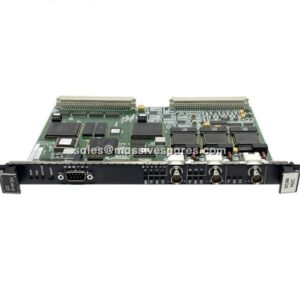
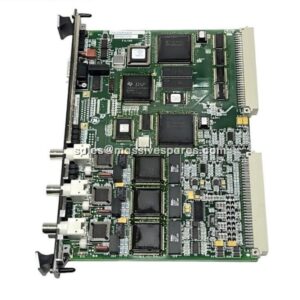
| Product Category | VME bus master controller / VCMI communication interface board |
| System Platform | GE Speedtronic Mark VI |
| Processor | Texas Instruments TMS320C32, 32-bit DSP |
| Memory | Dual-port SRAM |
| VME Form Factor | 6U VME board |
| IONet Ports | 3 × 10Base2 Ethernet ports |
| Serial Interface | 1 × RS-232C diagnostic or configuration port |
| Frame Rate | 20 ms at 50 Hz |
| Typical System Type | Simplex or triple modular redundant system |
| Power Supply Monitoring | +5 V, ±12 V, ±15 V, and +28 V rails |
| Status Indicators | Run, Fail, Status, and port activity LEDs |
| Mounting Method | VME control or I/O rack slot |
| Operating Environment | Industrial cabinet environment |
GE publication GEH-6421C provides additional technical and configuration information for the Mark VI VCMI family. Exact operating limits and system requirements should be confirmed against the documentation applicable to the specific rack, revision, and turbine application.
Technical Principles and Innovative Values
- Innovation Point 1: VME bus arbitration and control. The GE IS215VCMIH2CB acts as the VME master in supported I/O and control racks. It governs backplane data flow and supports board identification, which is essential for organizing complex Mark VI control architectures.
- Innovation Point 2: Integrated IONet communication. Three 10Base2 IONet ports connect the VCMI to the system control network. In redundant configurations, these ports support the communication paths used for state exchange, voting, and fault-tolerant control data.
- Innovation Point 3: Deterministic control performance. The module operates with a 20 ms frame rate at 50 Hz in typical applications. Predictable timing helps maintain synchronized control, protection, and I/O updates in turbine control systems.
- Innovation Point 4: Dual-port memory architecture. The DSP and VME system can access shared data structures efficiently. This supports coordinated communication between the controller, I/O modules, and the VCMI without unnecessary data-transfer bottlenecks.
- Innovation Point 5: Integrated monitoring and diagnostics. The GE IS215VCMIH2CB supports power-supply monitoring, ground-fault detection, external-circuit monitoring, and front-panel status indication. These features help maintenance personnel distinguish between board, backplane, power, and cabling problems.
- Innovation Point 6: Redundancy compatibility. The module is commonly applied in simplex and triple modular redundant systems. Its communication role supports the high-availability architectures used in critical turbine control applications.