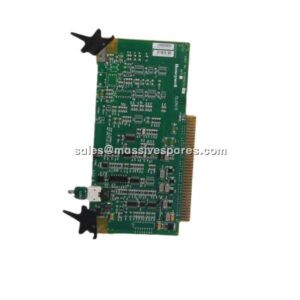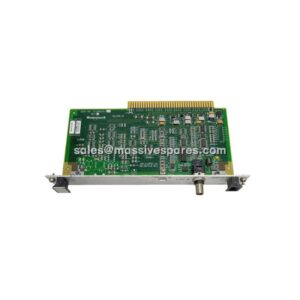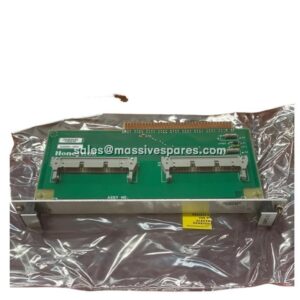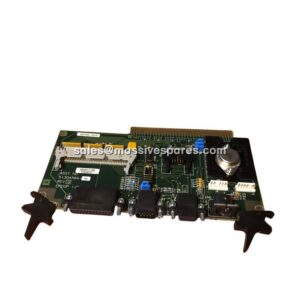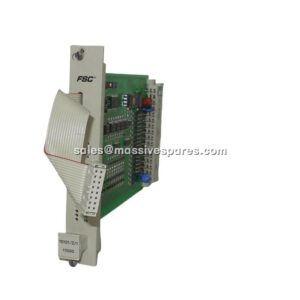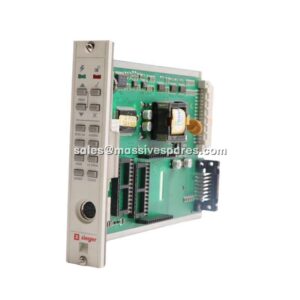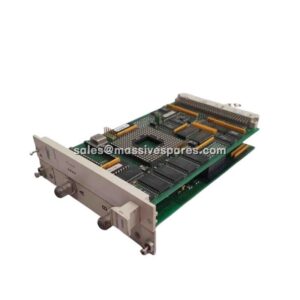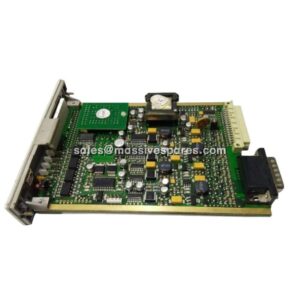

Description
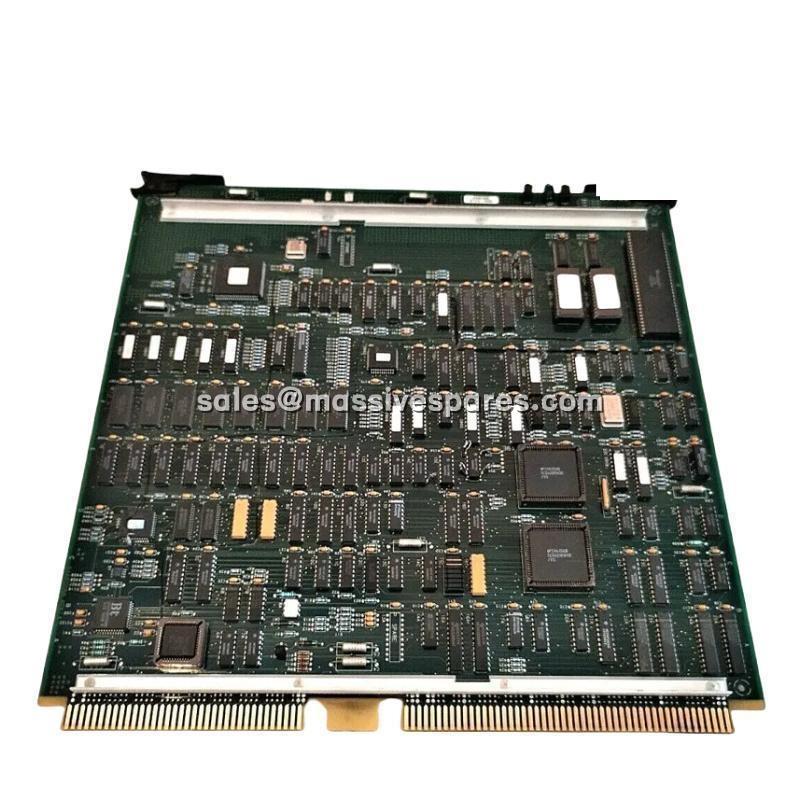
Application Scenario
In a large ethylene plant running a Honeywell TDC 3000 system, operators began reporting flickering displays, delayed trend refreshes, and intermittent trackball response at one Universal Station console—exactly the kind of symptom that erodes situational awareness during a process upset. The control engineer isolated the issue to a first-generation EPDG board whose graphics memory handling could no longer keep up with the station’s multi-window display configuration.
After installing a verified Honeywell 51402089-100 (EPDG2) with the correct CE-compliant paddle board, the console immediately returned to smooth, lag-free operation. Process mimics, alarm lists, and real-time trends refreshed cleanly, and cursor control through the trackball was instantly responsive again. The plant’s control-room supervisor noted that operators “got their eyes back,” and the maintenance team converted the old board to a benchmark spare. The story illustrates the real value of the 51402089-100: in a control room, the display is not a peripheral luxury—it is the operator’s primary decision-making tool. When it falters, every other system suffers.
Parameters
| Main Parameters | Value / Description |
|---|---|
| Product Model | 51402089-100 (EPDG2) |
| Manufacturer | Honeywell (USA) |
| Product Category | Enhanced Peripheral Display Generator (EPDG2) Interface Board |
| Alternate Designation | EPDG2 Board for LCN-US; EPDG2 Enhanced Video Board |
| System Platform | Honeywell TDC 3000 Universal Station (US) / LCN-US; referenced for GUS/EPKS upgrade paths (verify revision) |
| Primary Function | Video/graphics signal generation, peripheral communication & control |
| Backplane / Bus Interface | High-speed proprietary backplane interface (TDC 3000 / LCN) |
| Display Output | High-resolution process graphics, alarm faceplates, real-time trends |
| Peripheral Support | Keyboard, mouse, trackball, touchscreen, printer |
| Storage Interface | SCSI controller for Bernoulli and Zip removable drives |
| I/O Paddle Board Options | Non-CE: EPDGP (e.g., 51404584-100); CE: EPDGC-1 (51402447-100), EPDGC-2 (51402447-200) |
| Input / Logic Power | 5 V DC nominal (logic); auxiliary 12 V DC on some configurations (verify label) |
| Power Consumption | Approx. 15 W typical @ 5 V DC (per EPDG2 reference; confirm revision) |
| Operating Temperature | 0 °C to +55 °C (references range −20 °C to +70 °C; observe installed-asset specification) |
| Storage Temperature | −40 °C to +85 °C |
| Relative Humidity | 0–95% non-condensing |
| Mounting | Universal Station chassis / card-cage backplane, slot-mounted |
| Physical (approx.) | 233 mm × 160 mm × 20 mm; weight approx. 0.65–1.0 kg (varies by assembly/revision) |
| Compliance | CE (with CE paddle board option), UL, FCC per OEM build (confirm on label) |
| Revision / PCB | Assembly No. 51402089-100; documented units show Rev H, 94V-0 PCB material |
Technical Principles and Innovative Values
- Innovation Point 1 — Graphics Processing Offloaded from the Control Processor. The 51402089-100 EPDG2 takes graphics generation, window compositing, and peripheral servicing away from the node’s main processor. By dedicating silicon and memory to video and HMI tasks, it keeps process-control computation and operator-display rendering independent—so a complex multi-window mimic does not steal cycles from control logic.
- Innovation Point 2 — Smooth, Real-Time Operator Visualization. As an Enhanced Programmable Display Generator, the EPDG2 delivers faster refresh rates and improved memory handling over first-generation EPDG hardware. The result is lag-free representation of bar graphs, pie charts, trend lines, alarm faceplates, and live process mimics—the visual clarity operators need for critical monitoring and manual intervention.
- Innovation Point 3 — Unified Multi-Peripheral Controller. Rather than separate interface cards for every device, the 51402089-100 integrates cursor control (touchscreen, trackball, mouse), keyboard scanning, printer communication, and SCSI storage control on one board. This reduces slot count, cabling, and failure points in the operator console.
- Innovation Point 4 — Modular Paddle-Board Architecture. Display signals, keyboard, pointing devices, and printer ports terminate on a dedicated rear-transition paddle board, not directly on the EPDG2. Selectable Non-CE (EPDGP, e.g. 51404584-100) and CE-compliant (EPDGC-1 51402447-100 / EPDGC-2 51402447-200) options let the same core board adapt to regional compliance requirements.
- Innovation Point 5 — Legacy-Storage Awareness for Archival Workflows. Integrated SCSI support for Bernoulli and Zip drives means historical data, configurations, and reports stored on removable media remain accessible through the operator station—extending the usable life of assets that have not yet migrated to modern historian platforms.