
Description
Technical Specifications
| Parameter Name | Parameter Value |
|---|---|
| Product Model | SST 5136-DNP-CPCI |
| Manufacturer | SST / Woodhead Software & Electronics (Molex) |
| Product Type | DeviceNet CompactPCI Interface Card |
| Bus Architecture | 3U CompactPCI (cPCI) Eurocard form factor |
| Network Protocol | DeviceNet (CAN-based) |
| Network Roles | Group 2 Master, Group 2 Slave, UCMM Capable |
| Baud Rates | 125 Kbps, 250 Kbps, 500 Kbps (software configurable) |
| Processor | 40 MHz high-performance processor |
| Onboard Memory | 512 KB RAM, 512 KB Flash, 256 KB shared RAM |
| Network Isolation | 500V opto-isolated CAN transceiver circuitry |
| Connector Type | Standard 5-pin open-style Phoenix pluggable terminal block |
| Power Supply | Bus-powered via cPCI backplane (5V DC); network transceiver via 24V DC DeviceNet bus |
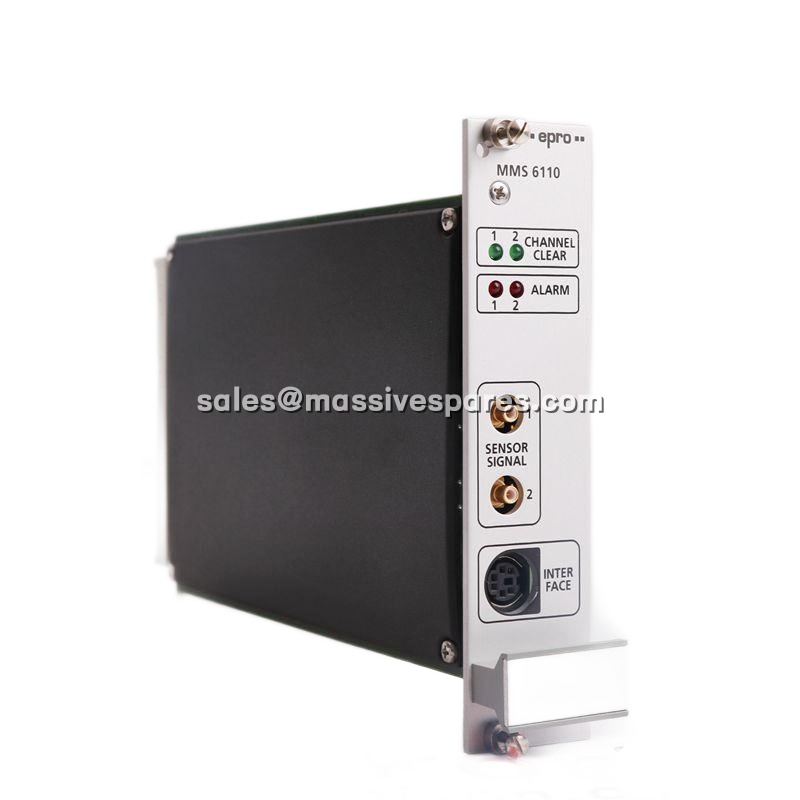
| Diagnostic Indicators | Front-panel MOD/NET status LEDs |
| Operating Temperature | 0°C to 60°C (industrial grade) |
| Dimensions | 2.1cm × 20.8cm × 13.1cm (approximate) |
| Weight | 0.15 kg |
Main Features and Advantages
Hardware-Executed DeviceNet Protocol: The SST 5136-DNP-CPCI distinguishes itself from generic multi-port communication cards by executing the entire DeviceNet protocol stack in dedicated onboard hardware. The 40 MHz processor and 512 KB of RAM handle CAN bus arbitration, message filtering, and cyclic I/O data exchange independently of the host CPU. This offloading capability dramatically reduces host processor load, enabling the host system to dedicate its resources to application-level control logic rather than network protocol management. In high-throughput applications, this architectural advantage translates directly to faster scan times and more deterministic control performance.
Simultaneous Master and Slave Operation: The SST 5136-DNP-CPCI supports the concurrent execution of Group 2 Client (Master) and Server (Slave) operations, a capability rarely found in single-card DeviceNet interfaces. This dual-role functionality enables the card to serve as both an I/O scanner for slave devices and a data server to a higher-level supervisory controller, bridging network segments without additional gateway hardware. For system integrators, this flexibility simplifies architecture design and reduces component count in complex DeviceNet installations.
Complete DeviceNet Feature Set with UCMM Support: The SST 5136-DNP-CPCI implements full DeviceNet messaging capabilities including Polled, Strobed, Change of State (COS), Cyclic, and Explicit Messaging. UCMM (Unconnected Message Manager) capability ensures compatibility with modern DeviceNet devices that rely on unconnected messaging for configuration and diagnostics. Dynamic explicit connections across Groups 1, 2, and 3 provide the flexibility to communicate with virtually any DeviceNet-compliant device regardless of its connection model.
Open Documented Memory Map with Example Code: SST provides an open documented memory map interface for the SST 5136-DNP-CPCI, accompanied by example C source code and Windows 32-bit DLLs and drivers. This transparency enables system integrators to develop custom applications tailored to specific control requirements without reverse-engineering proprietary interfaces. The availability of source-level examples accelerates development cycles and reduces integration risk for OEM and end-user projects alike.
Network Isolation and Diagnostic Visibility: The SST 5136-DNP-CPCI incorporates 500V opto-isolated CAN transceiver circuitry, protecting both the cPCI backplane and the host computer from electrical transients and ground faults on the DeviceNet network. Front-panel MOD/NET status LEDs provide immediate visual confirmation of module health and network activity, enabling technicians to diagnose communication issues without requiring external test equipment or software tools.