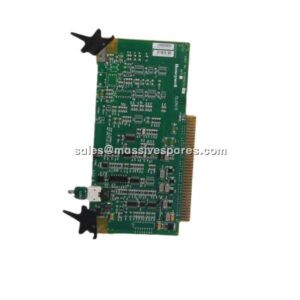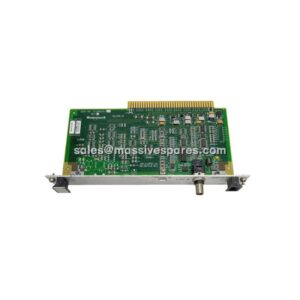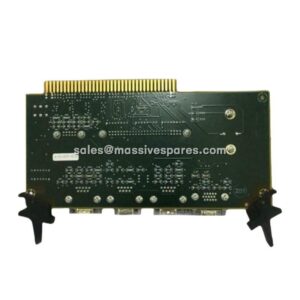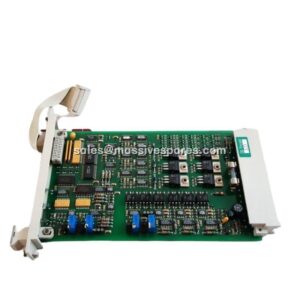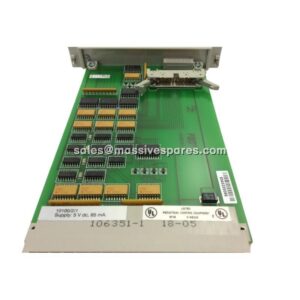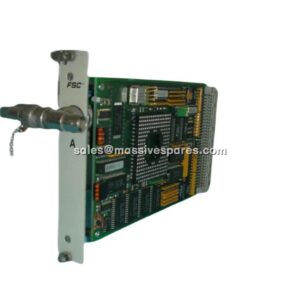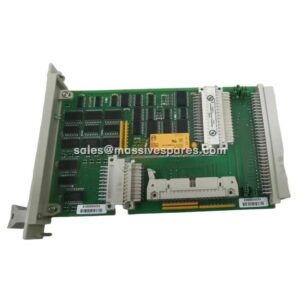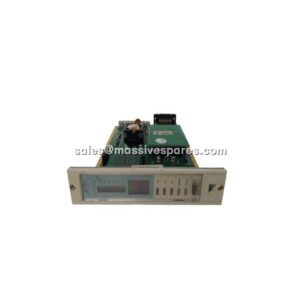

Description
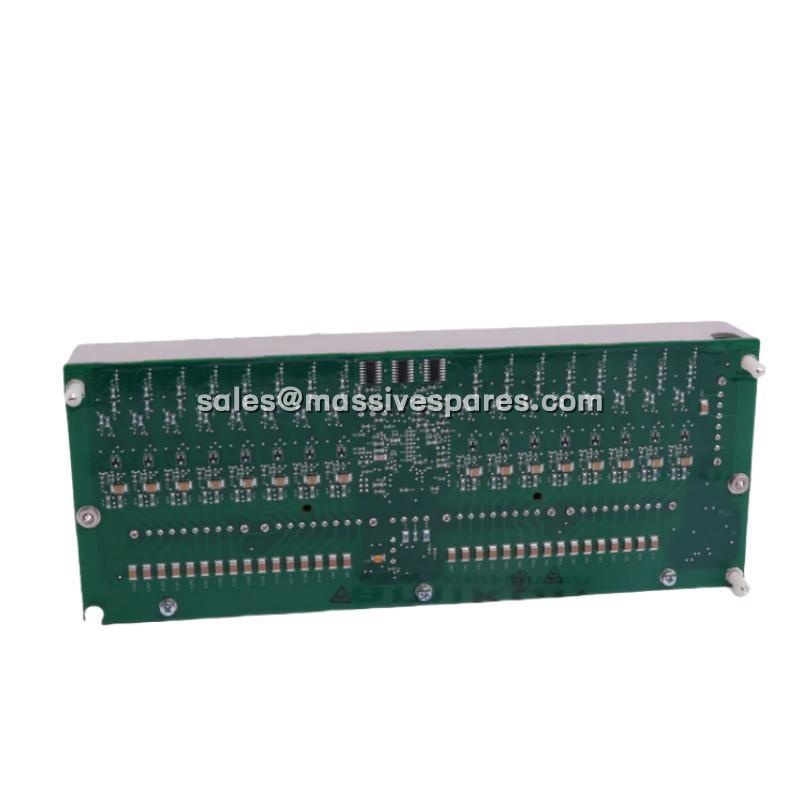
Application Scenarios
A Middle Eastern oil refinery operating a TDC 3000-based Distributed Control System was experiencing intermittent communication drops on one segment of its Local Control Network, causing “Node Fail” alarms across several critical control loops. Because the plant relied on a multi-slot chassis assembly with secondary expansion rows, the maintenance team needed a board that could integrate into tight mechanical constraints without interrupting live segments. After installing the Honeywell 51305072-700, the facility restored stable deterministic backplane communication across both LCN paths (Cable A and Cable B). The dual BNC tee connectors allowed seamless insertion without severing active communication—a decisive advantage during a live turnaround.
This real-world case illustrates the core value of the 51305072-700: it addresses the pain points of signal degradation, electromagnetic interference, and difficult retrofits in legacy DCS infrastructure, where uptime is non-negotiable. For plants still running TDC 3000, TPS, or hybrid Experion PKS architectures, this board is not merely a spare part—it is the lifeline that keeps decades-old assets competitive, safe, and production-ready.
Parameter
| Main Parameters | Value/Description |
|---|---|
| Product Model | 51305072-700 |
| Manufacturer | Honeywell (USA) |
| Product Category | TDC 3000 Input/Output Board (CLCN-A/B I/O PWA) |
| System Compatibility | TDC 3000 / TPS / Experion PKS DCS |
| Core Function | Dual-channel LCN interface & I/O signal routing |
| Communication Bus | Deterministic backplane bus; LCN (Local Control Network) |
| Interface Connectors | Dual BNC tee connectors (Cable A / Cable B) |
| Redundancy | Dual coaxial A/B channel routing for fault tolerance |
| Isolation Voltage | Up to 1500 VDC (channel-to-backplane protection) |
| Input Voltage | 12–24 VDC (nominal 24 VDC) |
| Power Consumption | Low-power industrial design (backplane-supplied) |
| Operating Temperature | 0°C to +60°C (control-room rack environment) |
| Storage Temperature | -40°C to +85°C |
| Humidity | 5% to 95% RH, non-condensing |
| Mounting Type | Standard 5-slot / 10-slot chassis (DIN/panel compatible) |
| Dimensions (W × H × D) | Approx. 3.0 cm × 13.5 cm × 23.7 cm |
| Weight | Approx. 0.16–0.18 kg |
| Hot-Swap Capable | Yes – BNC tees support live insertion/removal |
| Certifications | CE compliant |
Technical Principles and Innovative Values
- Innovation Point 1: Dual-Channel LCN Architecture
Unlike generic single-path I/O cards, the 51305072-700 implements deterministic backplane communication across two independent LCN paths (Cable A and Cable B). This dual coaxial routing ensures that a fault on one channel never blinds the controller, delivering true fault-tolerant operation—a decisive edge over non-redundant I/O designs. - Innovation Point 2: Hot-Disconnection via BNC Tee Connectors
The integrated front-panel BNC tee connectors allow technicians to insert or remove nodes without interrupting communication across the remaining active segment. In a live refinery or power plant, this capability can mean the difference between a controlled 30-second swap and a full process shutdown. - Innovation Point 3: High-Voltage Galvanic Isolation
With isolation rated up to 1500 VDC, the board protects sensitive backplane logic from industrial surges, ground loops, and electromagnetic interference—extending service life in electrically hostile environments such as compressor stations and switchgear rooms. - Innovation Point 4: Short Face-Plate Form Factor for Dense Chassis
Designed as the “short face-plate” variant, the 51305072-700 fits secondary expansion rows in multi-slot chassis assemblies where full-depth cards cannot be accommodated. This space-efficient design maximizes I/O density without compromising accessibility. - Innovation Point 5: Backward-Compatible Ecosystem Integration
The module speaks the native Honeywell LCN/UCN communication protocol, enabling seamless drop-in replacement within legacy TDC 3000 card files and smooth coexistence with modern Experion PKS migrations—preserving the plant’s original wiring investment.