Description
Technical Specifications
| Parameter Name | Parameter Value |
|---|---|
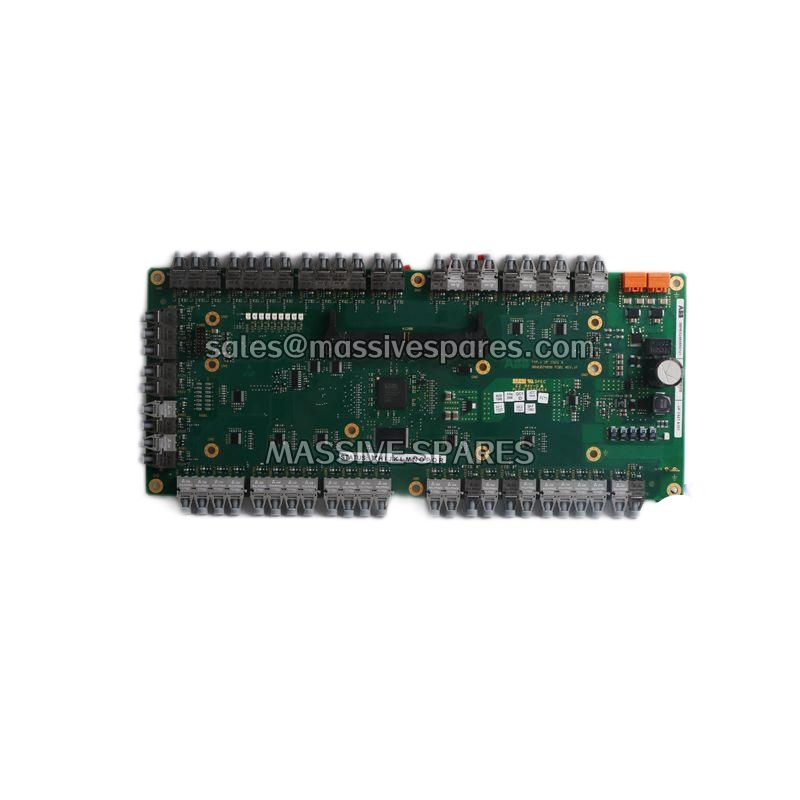
| Product Model | ABB PCD232A 3BHE022293R0101 |
| Manufacturer | ABB (Automation Products, now Hitachi Energy) |
| Product Type | Communications & I/O Module / PROFIBUS DP Interface / PEC80-CIO Excitation Control Board |
| Supported Platforms | AC 800M, 800xA DCS, AC 800PEC, UNITROL 6000 X-power |
| Communication Protocol | PROFIBUS DP (IEC 61158 Type 3, EN 50170), DP-V0 / DP-V1; Modbus RTU/TCP, CANopen, RS232, RS485 |
| Physical Interface | RS-485, 9-pin D-SUB (isolated, female); 2× configurable RS-232/RS-485 serial channels |
| Baud Rates | 9.6 kbps to 12 Mbps (PROFIBUS, auto-negotiated); up to 115.2 kbit/s (serial) |
| Max PROFIBUS Nodes | Up to 126 slaves (including repeaters) |
| Digital Input Channels | 12–16 channels, isolated, 24 V DC, 1 ms debounce filtering |
| Digital / Relay Outputs | Up to 32 channels, relay 250 V AC / 5–10 A, or PNP transistor 24 V DC / 1 A per channel |
| Analog I/O | 3 AI (±10 V or ±20 mA, <1% FSR), 3 AO (±10 V) |
| IGBT Pulse Drive | Isolated fiber-optic drive interface, 5000 VAC isolation |
| Electrical Isolation | 2500 VAC (control side to power side); 500 V RMS channel-to-backplane |
| Ethernet | 4-port 10/100 Mbps integrated switch (daisy-chain capable) |
| Processor | 32-bit high-speed RISC with FPU, 400 kHz control loop |
| Power Supply | 24 V DC (±10%, 20–28 V range), redundant dual input supported |
| Power Consumption | ≤ 30 mA (0.7 W typical); backplane ≤ 5 W |
| Operating Temperature | -25°C to +70°C |
| Storage Temperature | -40°C to +85°C |
| Relative Humidity | 5% to 95% RH, non-condensing |
| Dimensions | Approx. 131 × 149 × 89 mm (PEC80 variant); 147 × 80 × 120 mm (CIO variant) |
| Weight | Approx. 0.235 kg to 1.53 kg (depending on variant) |
| Mounting | Panel screw mount (power cabinet) or DIN-rail / backplane slot |
| Protection Rating | IP20 (cabinet interior installation) |
| Configuration Tool | ABB Control Builder M / Automation Builder (GSD file import) |
| Certifications | CE, UL 508, cULus, IEC 61131-2, RoHS; photoelectric isolation meets IEC 61508 SIL 2 |
Main Features and Advantages
Master/Slave Configurable PROFIBUS DP Connectivity
A defining strength of the ABB PCD232A 3BHE022293R0101 is its ability to operate as either a PROFIBUS DP master (Class 1 or 2) or a slave, offering exceptional flexibility for system integration. In master mode, the module actively polls remote I/O devices such as Siemens ET 200M stations or ABB ACS880 drives, while in slave mode it enables an ABB AC 800M system to be seamlessly integrated into a higher-level PLC, SCADA, or Siemens PCS 7 network. This dual-mode capability makes the ABB PCD232A an ideal solution for migrating legacy systems or building heterogeneous automation architectures without replacing existing field infrastructure.
Native Integration with ABB Engineering Tools
Unlike third-party gateways that require custom protocol parsing, the ABB PCD232A offers native configuration through ABB’s Control Builder M software. Simply import the device GSD file and the system automatically generates the data mapping table, eliminating manual address calculation and reducing engineering and commissioning time by days on large projects. The module supports DP-V0 cyclic I/O as well as DP-V1 acyclic read/write and alarm profiles, ensuring broad compatibility with both legacy and modern PROFIBUS device ecosystems.
High-Speed Deterministic Performance
At the heart of the ABB 3BHE022293R0101 lies a 32-bit RISC processor with a floating-point unit, delivering a communication scan cycle below 10 ms in DP mode and a 400 kHz feedback control loop in excitation service. This speed ensures that generator terminal voltage regulation holds steady during rapid load transients, while communication jitter remains in the millisecond range even at 70% bus load—critical for closed-loop boiler combustion control, rolling-mill speed synchronization, and turbine governing.
Redundancy and Fault Tolerance
When two ABB PCD232A modules are installed in a PEC80 rack, they run in a synchronized hot-standby configuration. If the primary module fails, the secondary assumes relay control and communication port responsibility without a millisecond of interruption. Combined with redundant 24 V DC power inputs and an integrated four-port Ethernet switch that supports daisy-chaining multiple PEC80 controllers without external industrial switches, the module radically simplifies network topology while maximizing availability.