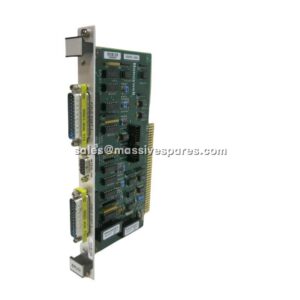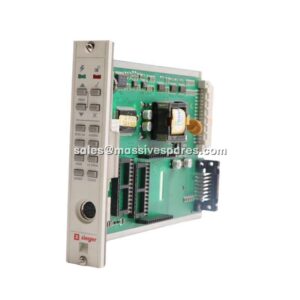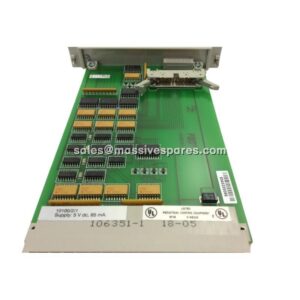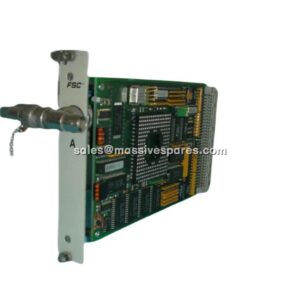

Description
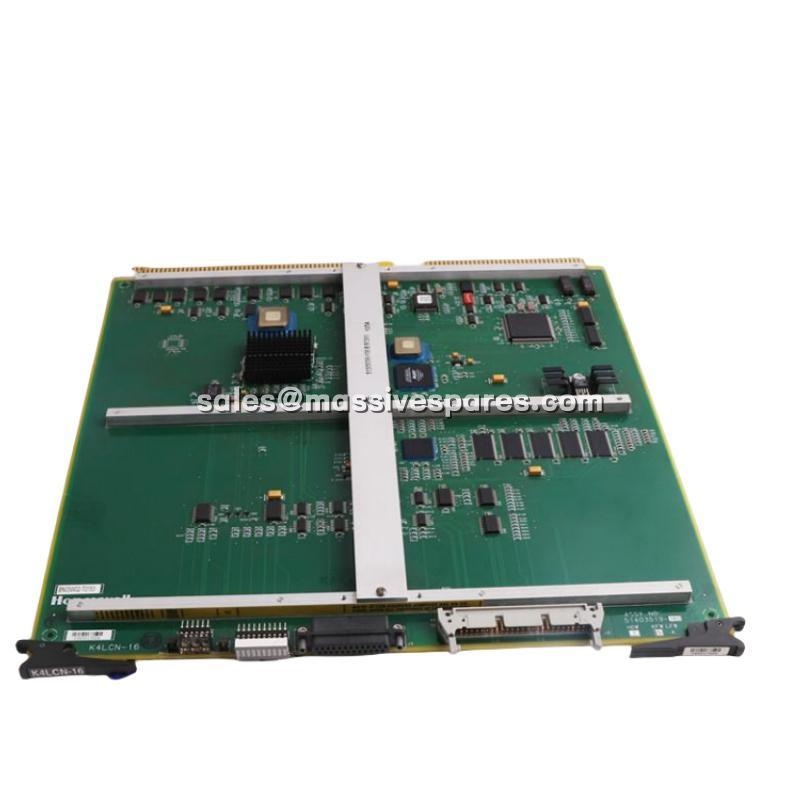
Application Scenario
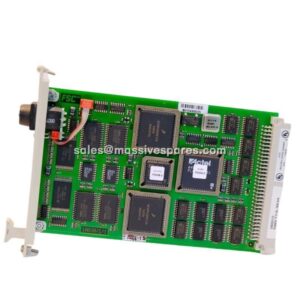
In a North Sea offshore platform’s TDC 3000-based production control system, the operations team began experiencing periodic “LCN Node Isolated” conditions at a history node during high-alarm-throughput periods — typically when multiple wells transitioned state and compressor surge events generated burst traffic. The root cause was traced to an aging first-generation K4LCN-8 board whose 8 MW memory buffer overflowed under peak load, triggering data loss and archive gaps that downstream custody-transfer and performance-monitoring systems depended on.
After replacing the unit with a verified Honeywell 51403519-160 (K4LCN-16) and correctly transferring the 16 MW DIMM-style mezzanine memory board (51402755-100), the node maintained clean buffering through the highest observed alarm storms. The 3-digit node-address display matched the rear CLCN-A/B I/O board setting, the green “Self-Test Pass” LED illuminated, and the platform recorded zero node isolations over the following six months. The control engineer’s assessment: doubling the memory headroom and moving to the 68040 core removed the single bottleneck that had been quietly undermining data integrity across the whole node. That is the practical value of the 51403519-160 — it is not merely a processor card; it is the guarantee that LCN traffic, control execution, and historical records all stay synchronized under real plant load.
Parameters
| Main Parameters | Value / Description |
|---|---|
| Product Model | 51403519-160 (K4LCN-16) |
| Manufacturer | Honeywell Process Solutions (USA) |
| Product Category | LCN Node Memory Processor / Kernel Module |
| Processor | Motorola 68040 with integrated FPU (floating-point unit) |
| Memory Capacity | 16 Megawords (16 MW), non-expandable on this assembly; ECC error-correcting RAM |
| Memory Form Factor | Horizontally pluggable DIMM-style mezzanine board (Assembly 51402755-100); earlier boards used vertical daughter board (51401946-100) |
| Onboard Firmware | 1 MB firmware Flash storage |
| System Platform | TDC 3000 / TotalPlant Solution (TPS) Release 500 and later; references to TDC 3000X |
| Core Functions | Kernel processor + integrated LCN Interface (LCNI); previously two separate boards |
| LCN Transmission | Proprietary synchronous LCN bus; 5 MHz digital clock synchronization (transmit & receive) |
| LCN Bus Speed | Fixed 1 Mbps synchronous polling |
| Network Redundancy | Dual LCN coaxial paths via CLCN A/B rear I/O (Coax A & Coax B) |
| Backplane Interface | Edge connector: module bus for power, data, and system-bus communication; mezzanine memory connector |
| Node Address Display | 3-digit alphanumeric LED display |
| Diagnostics | Extensive status LEDs: RST/PWR Fail, Self-Test Error, Data Compare Error, DTAK/BGAK Time Out, Data Parity Error, Bus Error, EDAC Single/Multi-Bit Error, LCN Transaction Error, TX (Green), Self-Test Pass (Green) |
| Address Pinning | TS1 / TS2 jumper block on board; all jumpers must be removed when used behind CLCN A/B or LCN I/O board — pinning set on rear I/O board only |
| Power Supply | 5 V DC nominal (logic); chassis 24 V DC rail referenced in field records (verify assembly label) |
| Power Consumption | Approx. 1.5 W module / ~620 mA per field reference; confirm against installed revision |
| Slot Position | Slot 1 of 5-slot LCN / AXM chassis |
| Isolation | 1500 V AC galvanic isolation between LCN coax field bus and internal processor logic (field reference) |
| Operating Temperature | 0 °C to +55 °C (installed cabinet; storage −40 °C to +85 °C) |
| Vibration / Shock | 5 g peak-to-peak (20–500 Hz); 30 g peak, 11 ms transient (field reference) |
| Physical (approx.) | 365 × 365 × 20 mm (full-width TPS slot PCB); weight approx. 0.8–1.0 kg |
| Compliance | CE (EMC), UL recognized; ATEX Zone 2 cabinet-compatible per field references — confirm on assembly label |
| Status | Discontinued / legacy product; direct replacement within K4LCN family |
Technical Principles and Innovative Values
- Innovation Point 1 — Kernel and LCN Interface Consolidated onto One Board. The 51403519-160 integrates the node Kernel processor and the LCN Interface (LCNI) functions that earlier TDC 3000 generations implemented as two separate cards. Fewer boards mean fewer backplane connections, less heat, and one less single point of failure in the node — a meaningful reliability gain in a chassis that may run uninterrupted for decades.
- Innovation Point 2 — 68040 Processor with Hardware Floating-Point for Deterministic Control. The Motorola 68040 core includes an integrated FPU, giving the K4LCN-16 the throughput to execute complex control algorithms, custom Control Language (CL) programs, and advanced process control strategies without offloading to external coprocessors. For UCN-heavy nodes or those hosting High-Performance Process Manager devices, the 68040 is the recommended baseline.
- Innovation Point 3 — 16 MW ECC Memory Protects Data Integrity Under Load. The 16 Megaword ECC error-correcting RAM buffers real-time process data, point databases, control code, and historian records. ECC detects and corrects single-bit errors while flagging multi-bit faults via the EDAC LEDs — directly preventing the silent data corruption that can compromise custody-transfer totals and safety-point records.
- Innovation Point 4 — 5 MHz Digital Clock Synchronization Across the Entire LCN. The K4LCN can both generate and receive digital clock synchronization data frames at the LCN-standard 5 MHz rate. This keeps every node on the network operating against a common time reference — essential for coordinated control, event ordering, and historical trend accuracy.
- Innovation Point 5 — Redundant A/B LCN Paths with Comprehensive Self-Diagnostics. Dual coaxial transceivers (Coax A / Coax B) connect through the rear CLCN A/B I/O board, so a single trunk short or cable cut does not blind the node. A full front-panel diagnostic array — timeout, parity, bus error, EDAC, transaction error, and self-test indicators — gives technicians immediate fault localization without special tools.