
Description
Application Scenarios:
A coastal refinery running a 240,000-barrel-per-day crude unit inherited an emergency shutdown system built from electromechanical relay racks. Every trip path ended in a 48 V DC solenoid on a shutdown valve several hundred metres from the cabinet, and the maintenance team had no way of knowing whether a coil was open or a fuse had blown until a demand actually occurred — the classic hidden-fault problem that turns a proof-test interval into a gamble. Nuisance trips during the monsoon season were costing more production than real process upsets.
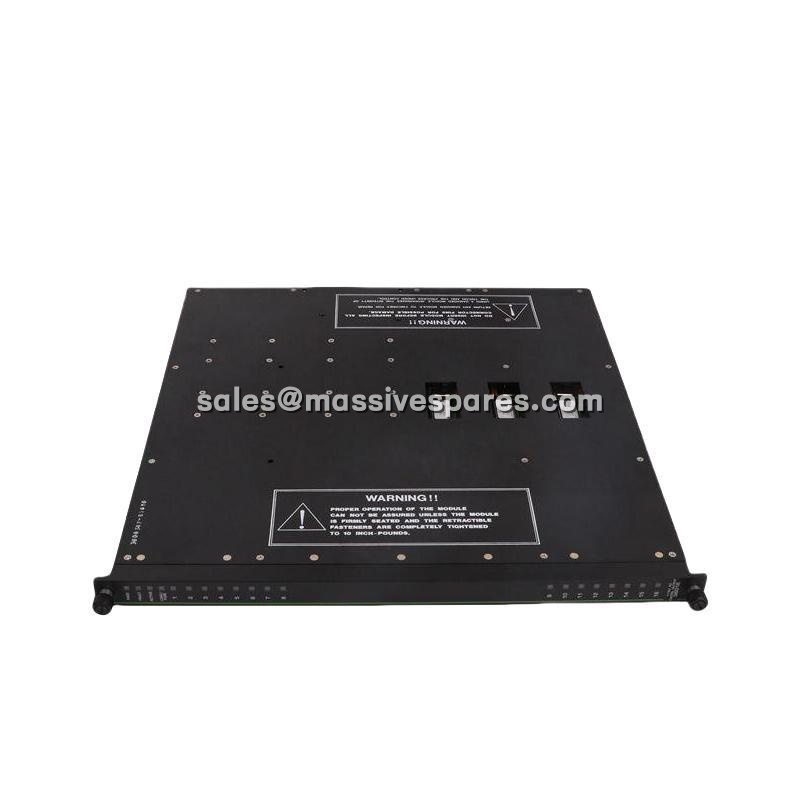
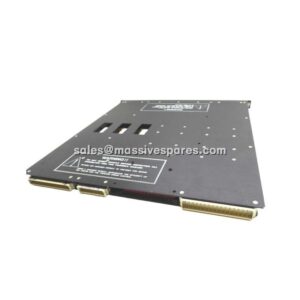
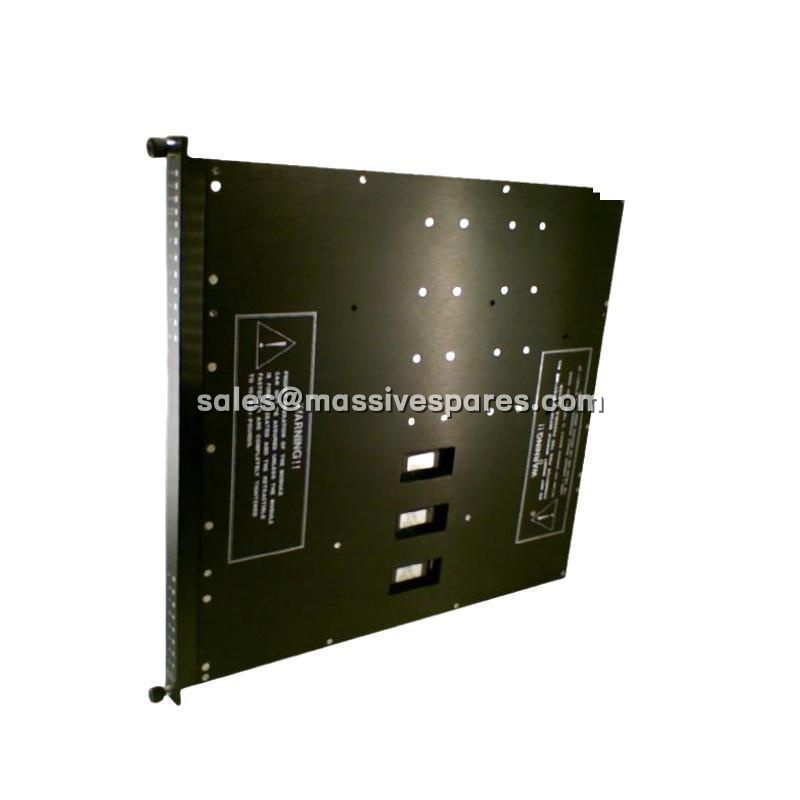
In the rebuilt cabinet, the 3607E slots directly into a standard Tricon I/O position and becomes the 48 V DC interface between the TMR logic solver and those field devices. Because all 16 points are non-commoned and individually fused, a ground fault on one valve cable can no longer reach its neighbours; because the card reports per-point status along with module PASS, FAULT, ACTIVE and LOAD/FUSE alarms, the technician sees a failing coil in the diagnostic monitor instead of discovering it during an incident. When a card does need attention, it is replaced online — the unit keeps running, and the safety function never drops below full redundancy.
The same pattern repeats wherever 48 V DC is the plant’s control voltage of choice: fire and gas damper and deluge valve circuits on offshore platforms, burner management trips and igniter circuits in power boilers, turbine and compressor interlocks, substation breaker and disconnector control, and long-run conveyor or loading-arm safety loops where 24 V DC simply drops too much voltage over the distance.
Parameter:
| Main Parameters | Value/Description |
|---|---|
| Product Model | 3607E |
| Manufacturer | Triconex (Invensys / Schneider Electric) |
| Product Category | 16-point 48 V DC TMR discrete I/O card, Tricon 3000 I/O family |
| Channel Count / Signal Level | 16 discrete points, 48 V DC nominal, 44–80 V DC operating window — the wide window tolerates battery-bus swing during a plant disturbance |
| Redundancy Architecture | Triple Modular Redundancy with 2-out-of-3 hardware voting — one lane can fail without changing the output state |
| Channel Isolation | Opto-isolated, non-commoned; 1500 V DC channel-to-channel and channel-to-backplane — each point floats on its own return, so no shared-common cross-talk |
| Per-Point Load Rating | 1 A continuous, 5 A surge for 10 ms — enough to drive large ESD solenoids and interposing relays directly |
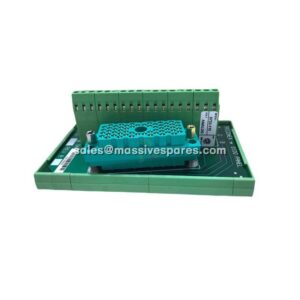
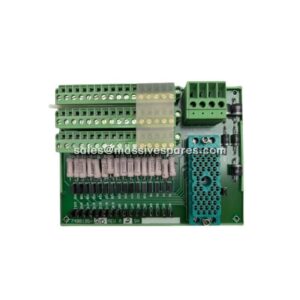
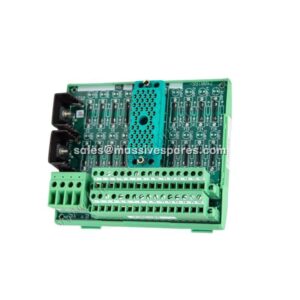
| Field Protection & Termination | 1.25 A fast-acting fuse per point on the external termination panel; compatible panels include 9667-810, 9667-110, 9652-610 and 9672-810 |
| Diagnostics & Status Indication | Continuous self-test, per-point ON/OFF LED, module PASS/FAULT/ACTIVE, LOAD/FUSE alarm, output state readback |
| System / Backplane Interface | Tricon I/O bus via ELCO-style backplane connector; no external fieldbus on the card itself |
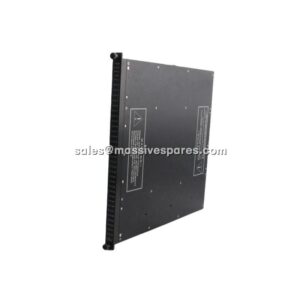
| Environmental & Mechanical | 0 °C to +60 °C operating (–40 °C to +70 °C storage, revision dependent), 5–95 % RH non-condensing; single-slot plug-in card, approx. 2.1–2.7 kg, blue keyed faceplate prevents mis-insertion |
| Safety Certification & Lifecycle | IEC 61508 SIL 3 capable, TÜV assessed; UL, CE, FM and ATEX Zone 2 coverage per revision — mature/legacy status, supplied from verified new-surplus or tested stock |
Technical Principles and Innovative Values:
Innovation Point 1 — Three lanes, one truth: instead of a single signal path, the 3607E processes every command through three isolated hardware lanes and reconciles them with 2-out-of-3 voting. A latent fault in one lane is outvoted and reported rather than acted upon, which is why the Tricon platform is routinely credited with availability above 99.99 % and is accepted for SIL 3 loops without external voting relays.
Innovation Point 2 — True point-level isolation: many 48 V input cards common their channels in groups of eight to save cost. The 3607E keeps all 16 points non-commoned with 1500 V DC isolation, so one wet cable, one reversed polarity or one welded contact cannot drag a neighbouring safety function down with it. In a cabinet carrying 60-plus trip signals, that containment is the difference between a localised alarm and a unit-wide shutdown.
Innovation Point 3 — Readback instead of assumption: the card verifies that the physical state of each point matches the commanded state, and raises a LOAD/FUSE alarm when the field loop is open, shorted or fused. This attacks the dangerous undetected-failure mode directly — the fault that hides until a demand occurs — and lets plants justify longer proof-test intervals with evidence rather than optimism.
Innovation Point 4 — Hot-swap with automatic re-synchronisation: the 3607E can be withdrawn and replaced while the Tricon system is online and scanning. The replacement card takes its configuration from the chassis, so mean time to repair is measured in minutes and the safety function stays fully redundant throughout — a decisive advantage over relay-based shutdown panels that must be de-energised for work.
Innovation Point 5 — 48 V DC as the engineered middle ground: 24 V DC loses too much voltage on long runs and needs heavy cable; 115/120 V AC brings arc-flash controls, insulation requirements and licensing constraints. The 3607E sits deliberately in between, driving substantial DC loads over hundreds of metres from a standard 48 V battery-backed bus that stays alive through a mains disturbance.
Innovation Point 6 — Lifecycle economics: with the classic Tricon I/O range now in its mature phase, a verified 3607E costs a fraction of a chassis-level migration to a newer platform while buying five to fifteen years of extended asset life — the single most common reason brownfield plants keep this card on the shelf.
Application Cases and Industry Value:
Case 1 — Refinery ESD modernisation, Brazil: when Petrobras set out to replace ageing relay-based emergency shutdown panels at the Duque de Caxias (REDUC, 242,000 bpd) and Paulinia (REPLAN, 360,000 bpd) refineries, multiple Tricon TMR systems were deployed across the cracking units, with the explicit goals of simplifying maintenance and raising asset availability. In installations of this type the 48 V DC discrete cards such as the Triconex 3607E form the execution layer between the voted logic and the field: every shutdown valve, vent and interlock is driven through an individually fused, isolated point that reports its own health. The measurable outcome the operators were buying was not raw speed but maintenance transparency — faults that previously required a physical round of the relay racks now surface as a named point in the diagnostic monitor, and the safety system can be serviced without stopping the unit.
Case 2 — Offshore platform and boiler protection retrofits: on brownfield offshore installations and utility boiler houses running legacy Tricon cabinets, 48 V DC discrete cards are typically consumed in three places — ESD valve solenoids, fire and gas damper and deluge actuators, and burner management trip circuits. Field teams on these sites consistently report the same two benefits when cabinets are standardised on the Triconex 3607E family: nuisance trips fall because ground faults on one circuit no longer propagate, and proof testing gets dramatically shorter because per-point LEDs and LOAD/FUSE alarms let a technician confirm loop integrity point by point instead of breaking into each circuit. Typical reported figures for this class of retrofit are a 30–40 % reduction in spurious shutdowns and roughly halved troubleshooting time, with the card’s 15-plus-year service life spreading the spare-part cost across many budget cycles. Figures vary by site and should be validated against your own maintenance history.