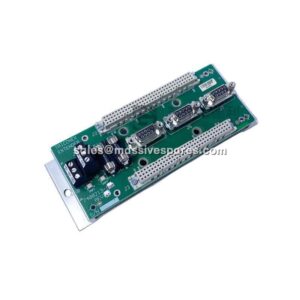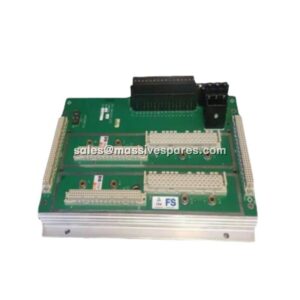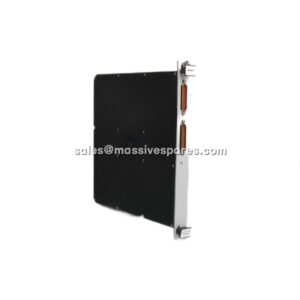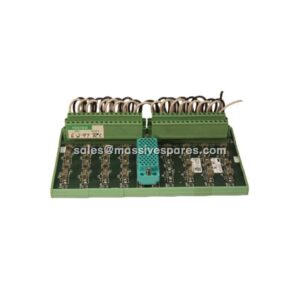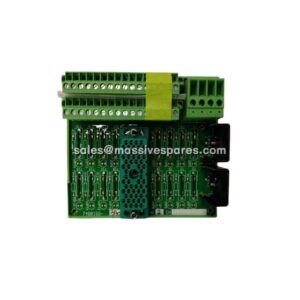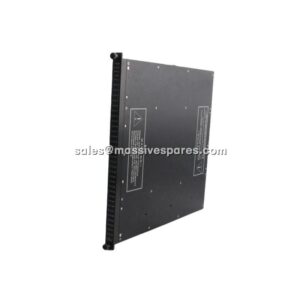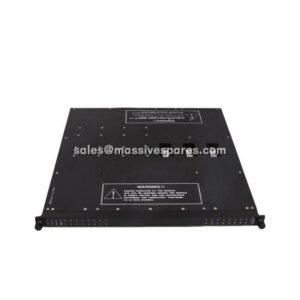

Description
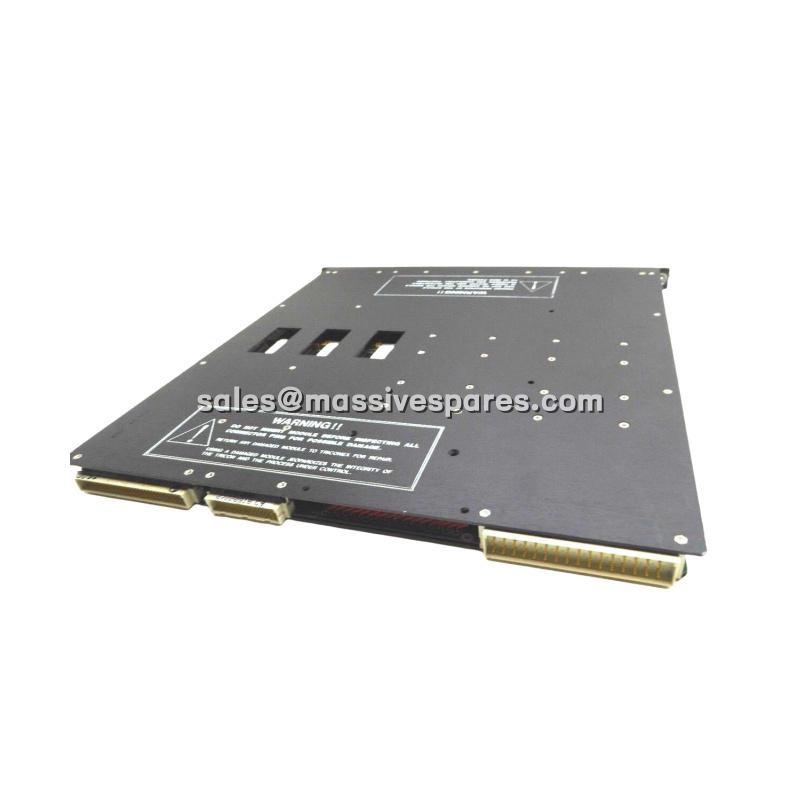
Application Scenarios
In a refinery’s Emergency Shutdown (ESD) system, the reliability of safety interlock execution directly impacts plant safety. A facility experienced a near-miss when a single output channel failure prevented an emergency isolation valve from actuating during a process upset. The retrofit project replaced the original output cards with 3601E TMR digital output modules, leveraging their internal 2-out-of-3 voting mechanism that compares output states across three independent channels—energizing or de-energizing field loads only when at least two channels agree. This architecture eliminates the possibility of spurious trips or failure-to-actuate caused by single-channel hardware degradation. Following commissioning, the module executed interlock actions accurately during multiple process fluctuations, contributing to a measurable reduction in unplanned shutdown frequency.
Parameters
| Main Parameters | Value/Description |
|---|---|
| Product Model | 3601E |
| Manufacturer | Triconex (Schneider Electric) |
| Product Category | TMR Digital Output Module (DO) |
| Output Points | 16, non-commoned |
| Nominal Voltage | 115 VAC |
| Voltage Range | 80–155 VAC |
| Frequency Range | 47–63 Hz |
| Max Current per Point | 2 A |
| Surge Current | 12 A/cycle |
| Isolation | Opto-isolated, 1500 VDC point isolation |
| Logic Power | <10 W |
| Output Protection | Zero-crossing TRIAC, reverse EMF protection |
| Status Indicators | Per-point ON/OFF; Module PASS/FAULT/ACTIVE |
| Field Alarm | LOAD/FUSE |
| Color Code | Green |
| Safety Certification | SIL 3 (IEC 61508) |
Technical Principles and Innovative Values
Innovation Point 1: TMR Hardware Voting for Output-Side Fault Tolerance. The 3601E contains three completely isolated output sub-circuits, each independently receiving commands from the main processors and driving the load. A voter continuously compares the three output states, activating field loads only when at least two channels agree. Any single-channel hardware degradation or interference-induced state drift is automatically outvoted, preventing the system from generating spurious trips or failing to actuate—a decisive capability in safety instrumented systems.
Innovation Point 2: Non-Commoned Architecture for Channel-Level Electrical Isolation. Unlike conventional commoned output modules, each of the 3601E‘s 16 output points has an independent return path without sharing a common terminal. This design fundamentally prevents a single channel’s external short circuit or ground fault from affecting other channels on the same module. In petrochemical facilities, field wiring degradation or electromagnetic interference-induced single-point grounding is a common failure source; the non-commoned architecture provides an additional safety barrier.
Innovation Point 3: Zero-Crossing TRIAC Output with Inductive Load Protection. The 3601E employs zero-crossing TRIAC technology to switch loads at the AC voltage zero-crossing point, substantially reducing back-EMF and electrical stress during inductive load switching (such as solenoid coils and contactors). Combined with built-in reverse EMF protection, this design significantly extends the service life of both the output stage and field loads.
Innovation Point 4: Comprehensive Self-Diagnostics with Field Alarm Capability. The module supports hardware-level output state verification and fault detection, capable of diagnosing field load circuit anomalies (such as open circuits or blown fuses) via LOAD/FUSE field alarm indication. Each output point’s ON/OFF status is visible through front-panel LEDs, enabling maintenance personnel to quickly locate abnormal channels. Diagnostic coverage is industry-leading, effectively reducing Mean Time To Repair (MTTR).