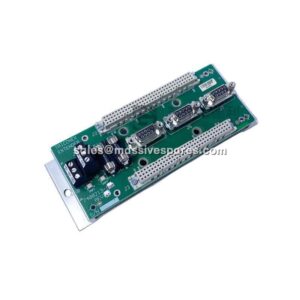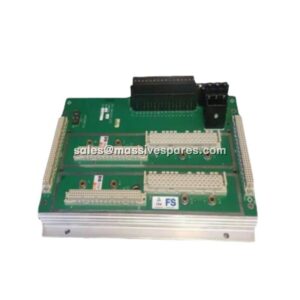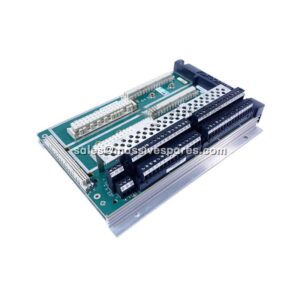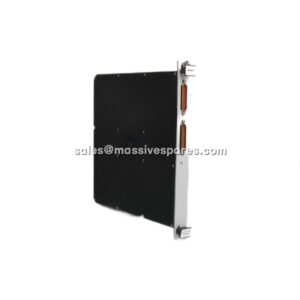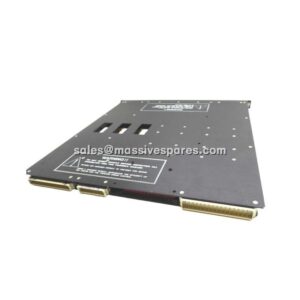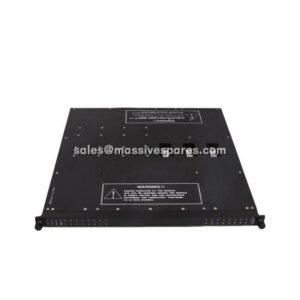

Description
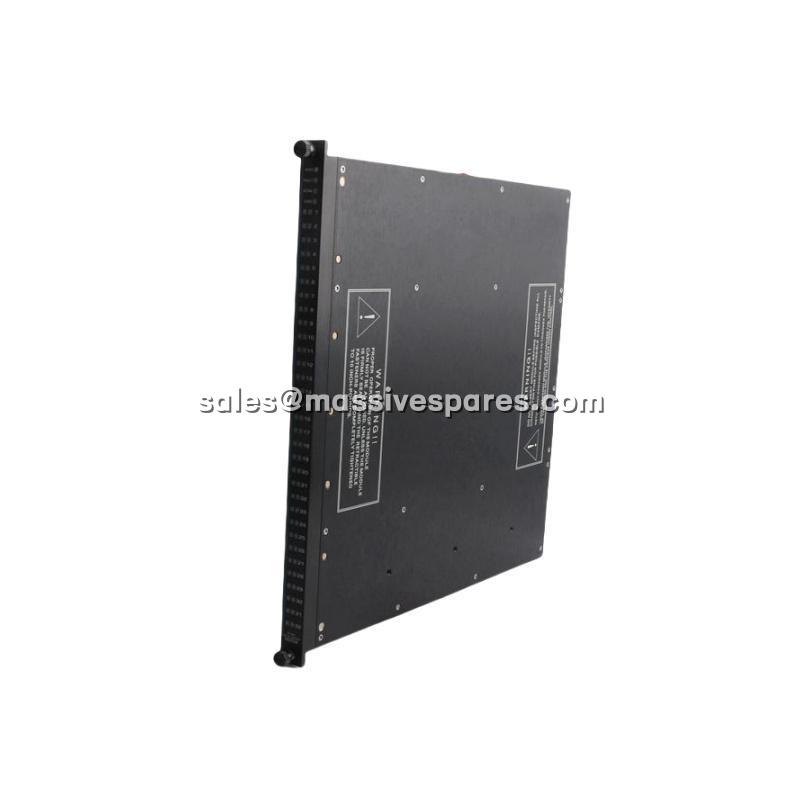
Technical Specifications
| Parameter Name | Parameter Value |
|---|---|
| Product Model | Triconex 4211 |
| Manufacturer | Invensys Triconex (Schneider Electric) |
| Product Type | Remote Extender Module (RXM) / Remote Expansion Module |
| Communication Media | Single-mode or multi-mode fiber optic cable |
| Fiber Connector Type | ST-style connectors |
| Maximum Transmission Distance | Up to 12 km (7.5 miles) with single-mode fiber |
| Data Transmission Rate | 375 kbit/s (TMR serial communication) |
| Redundancy Architecture | Triple Modular Redundant (TMR), 2oo3 hardware voting |
| Fiber Ports per Module | 2 SC-type transceivers (independent TMR signal paths) |
| Isolation Rating | 2000 VDC galvanic isolation (fiber front-end to backplane logic) |
| Power Supply | 24 VDC nominal (18–30 VDC range) |
| Power Consumption | Typically 18 W per card (up to 30 W maximum) |
| Operating Temperature | 0°C to +60°C continuous rated; -40°C to +70°C for extended variants |
| Storage Temperature | -40°C to +85°C |
| Operating Humidity | 5% to 95% RH, non-condensing |
| Mounting | Standard Tricon rack slot installation (3U Eurocard) |
| Hot-Swap Capability | Yes (online replacement supported) |
| Safety Certification | IEC 61508 SIL 3, TÜV certified |
| Diagnostic Indicators | PASS, FAIL, ACTIVE, TX, RX1, RX2, RX3 LEDs |
| Weight | Approx. 1.05 kg per card |
Main Features and Advantages
Long-Distance TMR Communication Over Fiber Optics: The Triconex 4211 extends the Tricon safety network far beyond the limits of copper-based backplane extensions, achieving transmission distances of up to 12 kilometers using single-mode fiber optic cable. This capability fundamentally transforms how safety instrumented systems can be deployed, enabling remote I/O racks to be located in distant process areas, satellite buildings, or offshore platforms while maintaining full TMR communication integrity. Unlike copper-based alternatives that suffer signal attenuation and electromagnetic interference beyond a few hundred meters, the Triconex 4211 delivers clean, noise-immune optical transmission that preserves the precise timing and data integrity required for SIL 3 safety loops.
Complete Galvanic Isolation Eliminates Ground Loops: The fiber optic interface of the Triconex 4211 provides 2000 VDC galvanic isolation between the remote chassis and the main controller location. This isolation is critical in industrial environments where significant potential differences can develop between grounding systems at different plant locations. Without this isolation, ground-loop currents can corrupt safety-critical signals, cause intermittent communication failures, or damage backplane electronics. The Triconex 4211 eliminates these risks entirely, providing a robust communication link that is immune to ground potential differences and common-mode noise.
Triple Redundant Architecture with Independent Signal Paths: Each Triconex 4211 module incorporates three completely independent transceiver sub-circuits, with no shared master microcontroller across the TMR legs. Incoming data is processed independently in each channel before hardware majority voting determines the valid signal. If a single optical transceiver degrades or fails, the remaining two channels continue to provide valid data, and the faulty leg is automatically discarded without interrupting communication. This architecture ensures no single point of failure can compromise the safety-critical communication link between the main and remote chassis.
Hot-Swap Replacement Without System Shutdown: The Triconex 4211 supports online hot-swap replacement, allowing maintenance personnel to replace a failed or degraded module without de-energizing the safety system or interrupting the controlled process. In a properly configured TMR system, removing one Triconex 4211 card from its triplet leaves the remaining two cards operational, maintaining communication continuity while the replacement is installed. This capability significantly reduces maintenance-related downtime and allows repairs to be scheduled during normal operations rather than waiting for planned shutdowns.