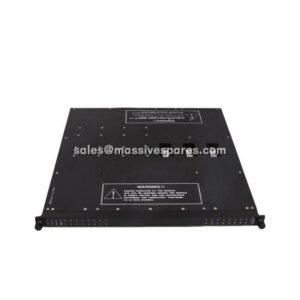

Description
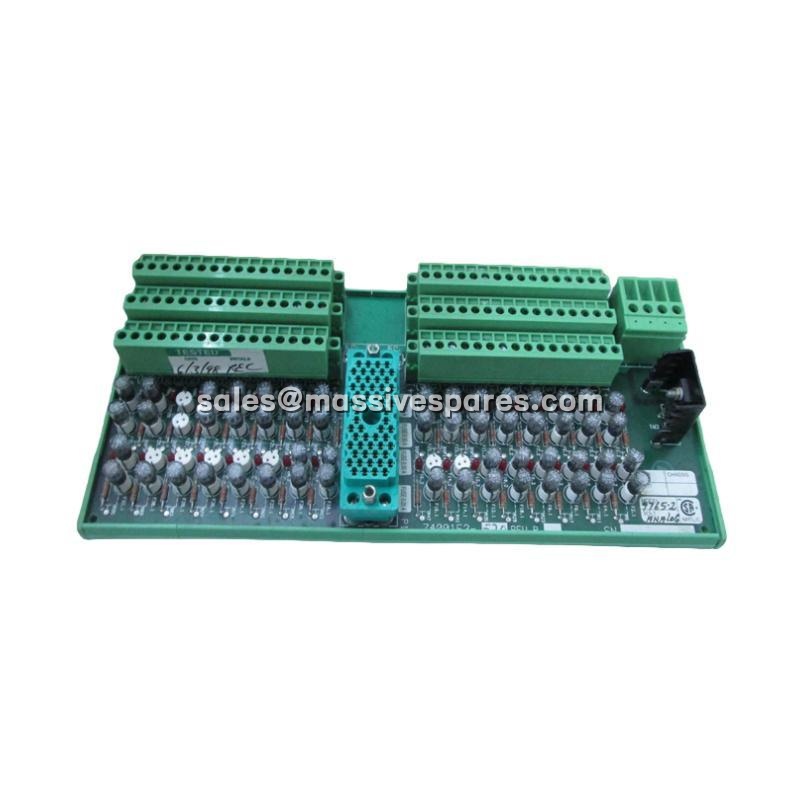
Application Scenarios
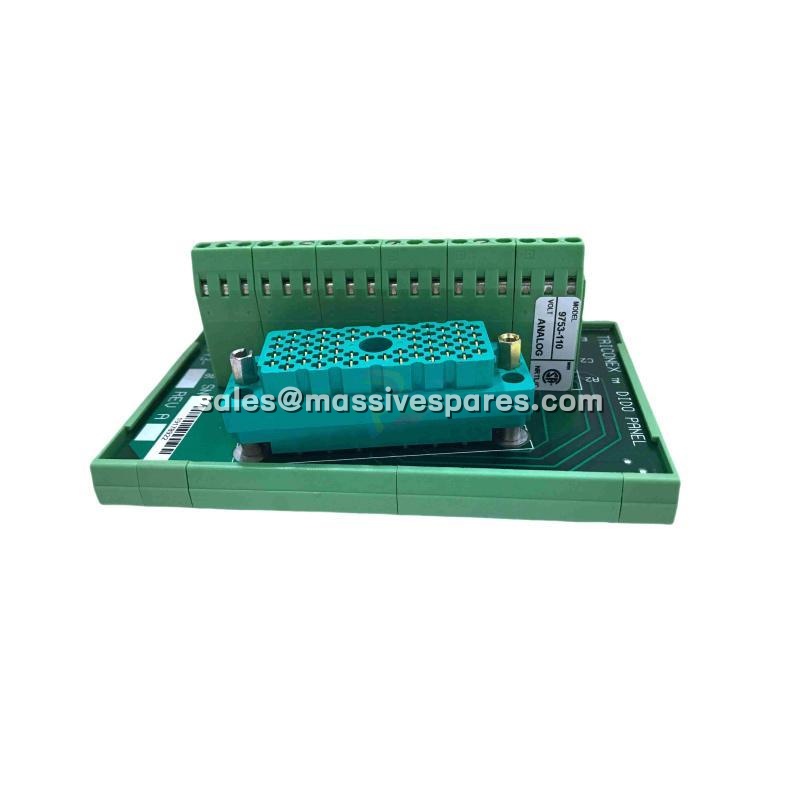
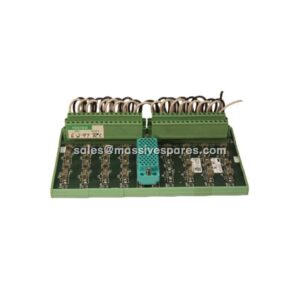
In a refinery emergency shutdown (ESD) system, the margin between safe operation and catastrophic failure often hinges on signal integrity. When a pressure transmitter detects an abnormal surge in a hydrocracker unit, that 4-20 mA signal must reach the safety controller without distortion, delay, or interference. The TRICONEX 9760-210 addresses this exact challenge. As a 32-point current input termination panel, it sits between the field wiring and the Triconex I/O modules, performing the essential current-to-voltage conversion that enables the safety system to interpret field data with the precision required for SIL-rated applications. Without this termination function, the raw current signals from transmitters would be incompatible with the voltage-based input modules, making reliable safety logic execution impossible.
Parameter
| Parameter | Value/Description |
|---|---|
| Product Model | TRICONEX 9760-210 |
| Manufacturer | Triconex (Schneider Electric) |
| Product Category | Analog Input Termination Panel / Current Input Terminal Board |
| Input Channels | 32 current input terminals |
| Input Signal Type | 4-20 mA, 0-5 VDC compatible |
| Signal Conversion | 250Ω precision resistor for current-to-voltage conversion |
| Current Limiting | 180Ω series resistor per positive terminal |
| Power Supply | Redundant 24 VDC with diode ORing |
| Power Switching Time | <1 ms on single power failure |
| Isolation | Channel-to-channel and channel-to-backplane isolation |
| Operating Temperature | -40°C to +85°C |
| Protection Rating | IP67 (dustproof and waterproof) |
| Communication | RS-485, Modbus RTU |
| Dimensions | 220mm × 150mm × 50mm |
| Weight | Approximately 1 kg |
| Certifications | CE, UL, CSA, ATEX, SIL 2/IEC 61508 |
| Compatible Modules | Triconex 3704E, 3720 analog input modules |
Technical Principles and Innovative Values
Innovation Point 1: Precision Current-to-Voltage Conversion Architecture. The TRICONEX 9760-210 employs a high-precision 250Ω resistor network to convert field current signals into 0-5 VDC voltage signals compatible with Triconex analog input modules. This conversion achieves error margins of ≤±0.05%, ensuring that the safety system receives accurate representations of process variables. Each positive input terminal is additionally protected by a 180Ω current-limiting resistor, preventing overload damage to downstream I/O modules during fault conditions.
Innovation Point 2: Redundant Power with Seamless Diode ORing. The TRICONEX 9760-210 supports dual 24 VDC power inputs connected through a diode ORing circuit. In the event of a single power supply failure, the panel switches to the backup source in less than 1 millisecond, with no interruption to signal conversion or transmission. This design eliminates the termination panel as a single point of failure, a critical requirement in safety instrumented systems where continuous operation is non-negotiable.
Innovation Point 3: Rugged Construction for Extreme Environments. With an IP67 protection rating and an operating temperature range spanning -40°C to +85°C, the TRICONEX 9760-210 is engineered for direct deployment in harsh industrial settings. The aluminum alloy housing with nickel-plated surface provides electromagnetic shielding, maintaining signal distortion below ±0.02% even in inverter-dense environments where electrical noise would compromise lesser termination solutions.
Innovation Point 4: TMR-Ready Signal Distribution. The TRICONEX 9760-210 is designed to interface with Triconex Triple Modular Redundant (TMR) architectures. By providing isolated, conditioned signals to the redundant I/O modules, it supports the voting logic that forms the foundation of Triconex safety systems. This architectural compatibility ensures that a single-point failure in any measurement chain does not compromise the system‘s ability to execute safety functions.