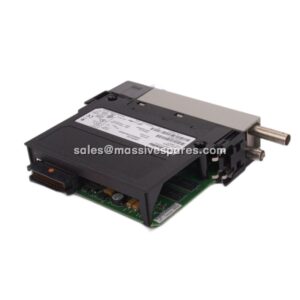

Description
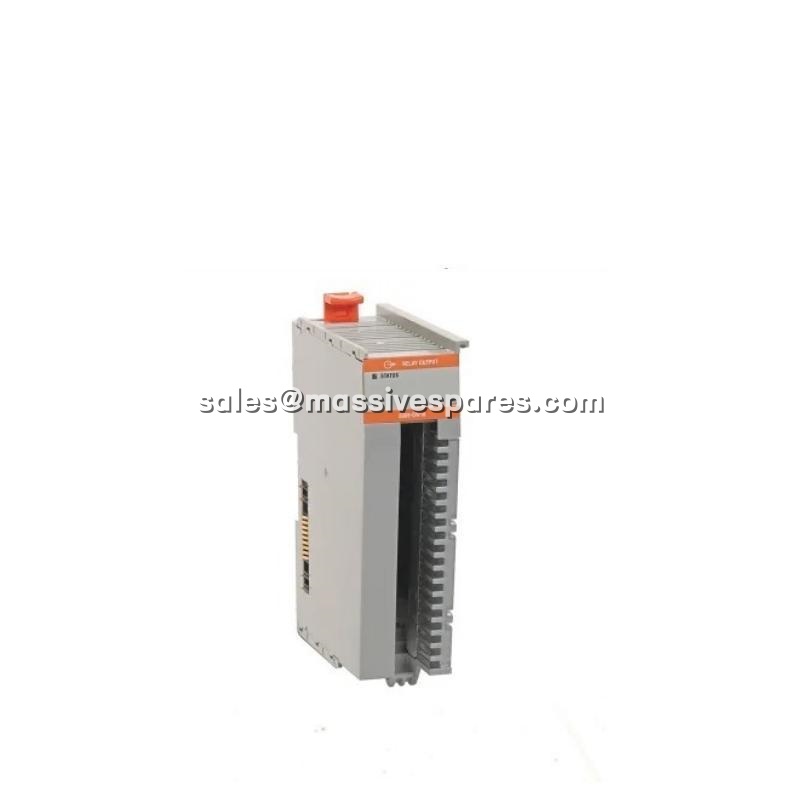
Application Scenarios:
A municipal wastewater plant was extending its tertiary treatment stage and inherited a control panel that had grown organically for fifteen years. One bank drove 24 V DC solenoid valves on the chemical dosing skids, another drove 120 V AC coil contactors on the blowers, and a third fed 230 V AC beacon and annunciator circuits. Every one of those needed an interposing relay to bridge the gap between the PLC’s 24 V DC output cards and the real load — roughly forty relays, forty sockets, forty sets of spare contacts to test, and a wiring bundle that took two days to fault-find.
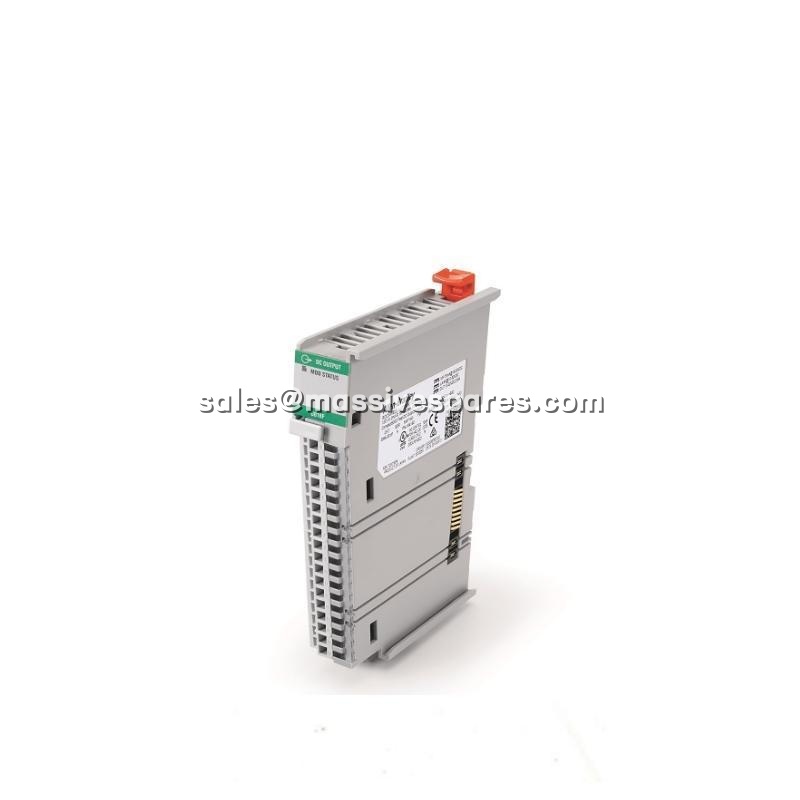
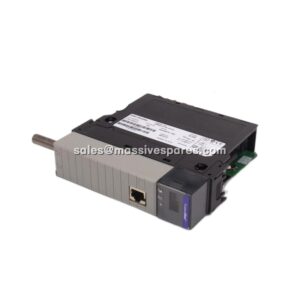
Rebuilt on Compact 5000 I/O, the 5069-OW16 collapses that entire layer. Each group of eight channels gets its own field power common, so the panel runs 24 V DC loads on one group and 120/230 V AC loads on the other from the same module, with no interface relays in between. When a blower contactor coil starts to draw high inrush, the relay contact absorbs it; when an operator asks why a beacon is dark, the yellow/red per-point LED answers in seconds without a multimeter. Because the module reports status over the backplane into Studio 5000 Logix Designer, the same information appears on the HMI and in the maintenance log rather than only on the door of the cabinet.
The same logic plays out in OEM packaging machines shipped to both 120 V and 230 V markets — one BOM line, one module, no market-specific output card — and in building services, material handling, food and beverage skids, and any panel where motor starters, solenoid valves, indicator lamps and alarm horns have to coexist.
Parameter:
| Main Parameters | Value/Description |
|---|---|
| Product Model | 5069-OW16 |
| Manufacturer | Allen-Bradley (Rockwell Automation) |
| Product Category | 16-point relay output module, Compact 5000 I/O (Series A/B/C) |
| Output Configuration | 16 Form A (normally open) contacts, 2 groups of 8 — each group has its own field power common, enabling mixed-voltage panels |
| Output Voltage Range | 5…125 V DC and 5…264 V AC, 50/60 Hz — one module covers 24 V DC, 120 V AC and 230 V AC loads |
| Relay Rating per Channel | 2 A resistive @ 5…30 V DC; 2 A resistive @ 5…264 V AC; 2 A general use @ 5…250 V AC; pilot duty C300 (AC) / R150 (DC) |
| Current Budget | 8 A max per group, 16 A max per module — plan group allocation so neither figure is exceeded |
| Switching Performance | 10 ms off-to-on and on-to-off; 0.3 Hz (1 operation / 3 s) at rated load; 30 mΩ initial contact resistance; 500 µs mean bounce |
| Contact Life | 300,000 cycles resistive, 100,000 cycles inductive — the figure to check before using it for fast cycling duty |
| Off-State Leakage | 0 mA per point (dry contact, no onboard snubbers) — safe for high-impedance loads and electronic inputs |
| Isolation | 250 V continuous, basic insulation type; type-tested at 1800 V AC for 60 s; no isolation between individual channels |
| Power & Backplane | MOD power 75 mA (Series A/B) or 225 mA (Series C) @ 18…32 V DC; SA power 150 mA (A/B); MOD/SA passthrough 9.55 A / 9.95 A, do not exceed 10 A |
| Wiring & Terminals | Removable terminal block 5069-RTB18-SPRING or 5069-RTB18-SCREW (ordered separately); 0.5…1.5 mm² (22…16 AWG), min 18 AWG 105 °C for load wiring; 0.4 N·m torque |
| Mechanical & Environment | 144.57 × 36 × 105.42 mm, 1.5 slot width, approx. 240 g; 0…60 °C operating, –40…+85 °C storage, 5–95 % RH non-condensing; 4.6 g vibration, 15 g operating shock |
| Certifications & Status | cULus, CE, UKCA, RCM, KC, CCC, ATEX and IECEx (at or below 125 V AC / 30 V DC), temperature code T4; lifecycle status Active |